Custom Workforce Management & Daily Reporting Platform
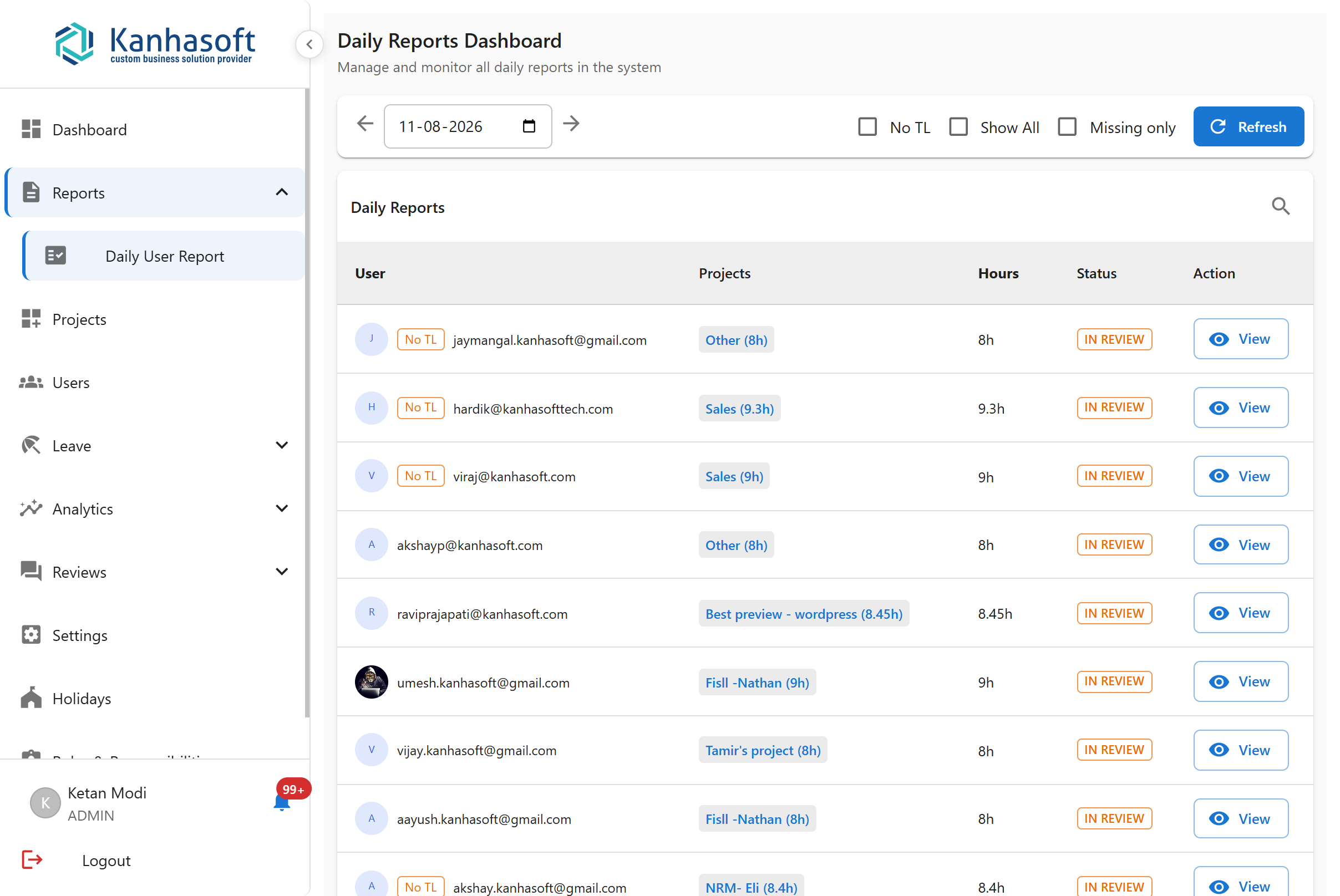
We developed a centralized workforce operations and daily reporting platform designed for software delivery and professional services teams to manage employee work reports, projects, resources, leave, tasks, approvals, performance reviews, and analytics. This custom business management platform enables employees to submit daily work, team leads to review and approve reports, HR teams to manage leave and employee information, and administrators to monitor workforce activity from one system. Built around role-based access and automated workflows, the platform reduces dependency on spreadsheets, emails, and manual follow-ups while improving visibility into project effort, resource capacity, missing reports, leave, and team performance.

5 Months
Norway
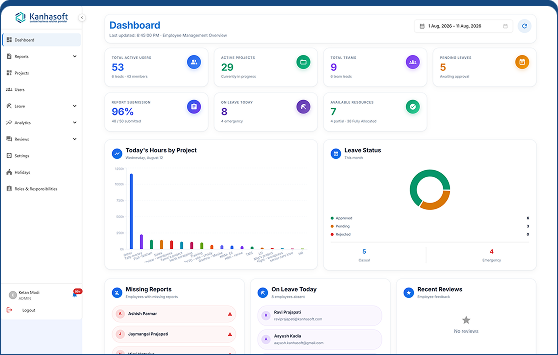
What Is a Workforce Daily Reporting Platform?
A workforce daily reporting platform is a centralized system that helps organizations track employee work hours, project activities, resource allocation, leave, tasks, approvals, and performance while giving managers real-time visibility into daily submissions, missing reports, project effort, and workforce availability.
Project Brief
The Workforce Operations & Daily Reporting Platform is a web-based solution designed to centralize employee reporting, project tracking, resource management, leave administration, tasks, performance reviews, notifications, and analytics.
The objective was to replace fragmented workflows spread across spreadsheets, chat, email, and separate leave trackers with one structured operating system.
The platform supports four primary roles—Admin, Team Lead, HR, and Member—with functionality and permissions aligned to each user’s responsibilities. Employees can record daily work against projects and tasks, while Team Leads can approve reports and leave requests. HR and administrators can manage employees, holidays, leave balances, resources, and company-level information.
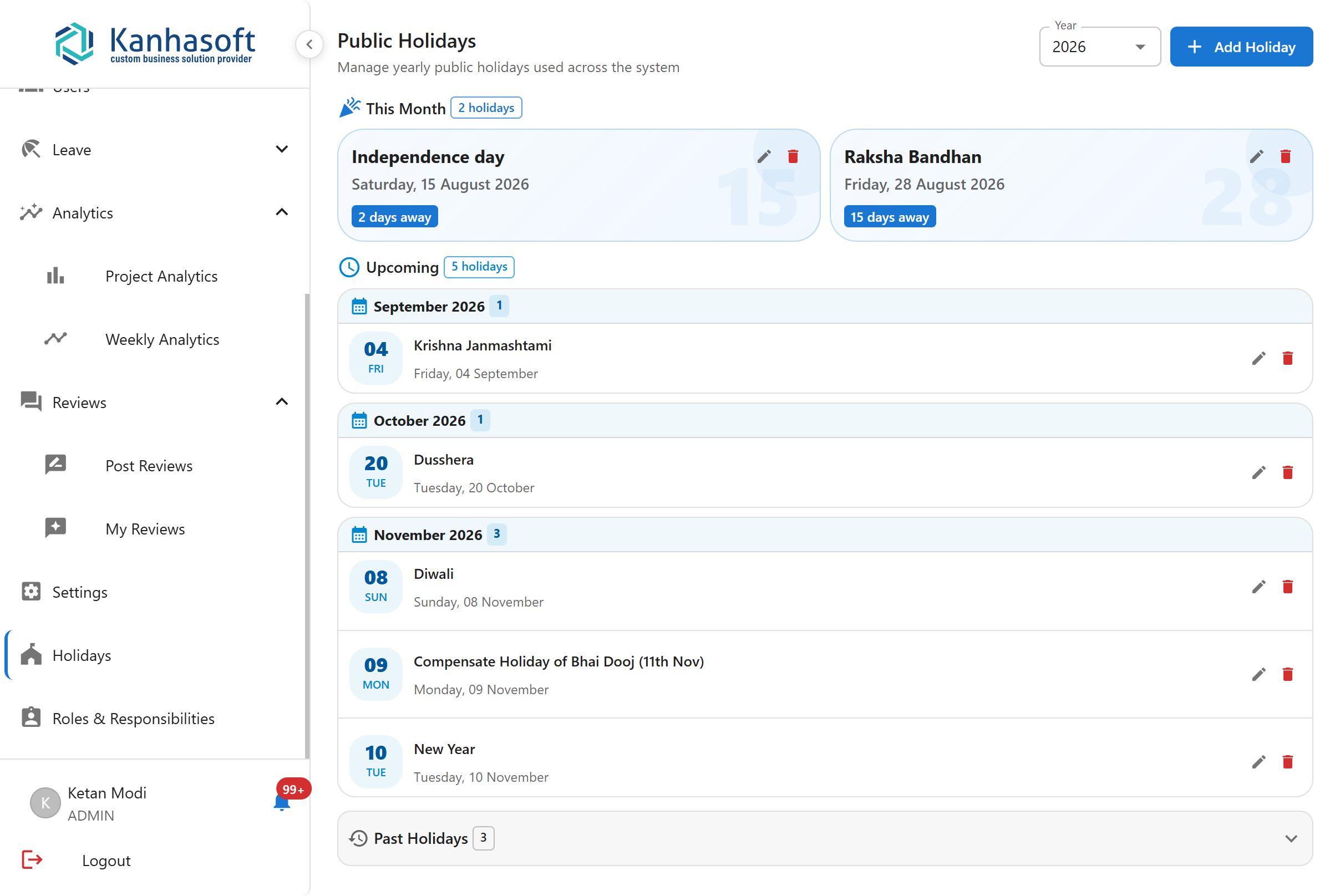
Management dashboards provide visibility into submissions, missing reports, people on leave, project activity, resource availability, and performance review sentiment.
Technologies
-

React JS
-
Next JS
-
TypeScript
-

Material UI (MUI)
-
Prisma ORM
-

PostgreSQL
-
Nodemailer
-

Tailwind CSS
-

Redux Toolkit
-
dayjs / date-fns
Client's Need
The client required a centralized workforce operations platform capable of managing employee daily reporting, projects, resources, leave, tasks, approvals, and performance from one system.
Build a Workforce Management Platform Around Your Operational Workflow
Managing employee hours, projects, leave, tasks, resources, and performance in separate systems makes even simple workforce questions harder to answer.
A centralized platform creates one reliable operating workflow where employee reporting, project effort, availability, leave, approvals, and management analytics remain connected.
Kanhasoft can help businesses evaluate their existing processes and develop a custom ERP and workforce management solution around their actual reporting, resource planning, approval, and operational requirements.

Challenges
Scattered Daily Timesheets: Employee hours and work updates were spread across Excel files, emails, and chat, making project effort difficult to track.
Missing & Late Reports: Managers lacked a reliable process for identifying employees who missed reports, submitted late, or left entries in draft status.
Limited Resource Visibility: Informal project assignments made it difficult to identify over-allocation, unused capacity, or staff availability.
Disconnected Leave Management: Leave records were managed separately from reporting and resource workflows, creating potential inconsistencies.
Slow Approval Processes: Daily reports and leave requests could remain pending because managers relied on manual inbox follow-ups.
Fragmented Master Data: Projects, users, teams, holidays, and skills maintained across separate sources increased the risk of inconsistent information.
Limited Workforce Reporting: Management lacked centralized visibility into submissions, missing reports, employee leave, project hours, resource capacity, and review sentiment.
Date & Timezone Handling: Reporting dates, holidays, and leave ranges needed reliable calendar-day handling to avoid date-related inconsistencies.
Access Control: Employee records, leave balances, reports, and performance reviews required authentication and role checks across both the user interface and APIs.
A centralized workforce management platform helps organizations standardize daily reporting, automate follow-ups, manage resources, and improve visibility across employee and project operations.
Solutions
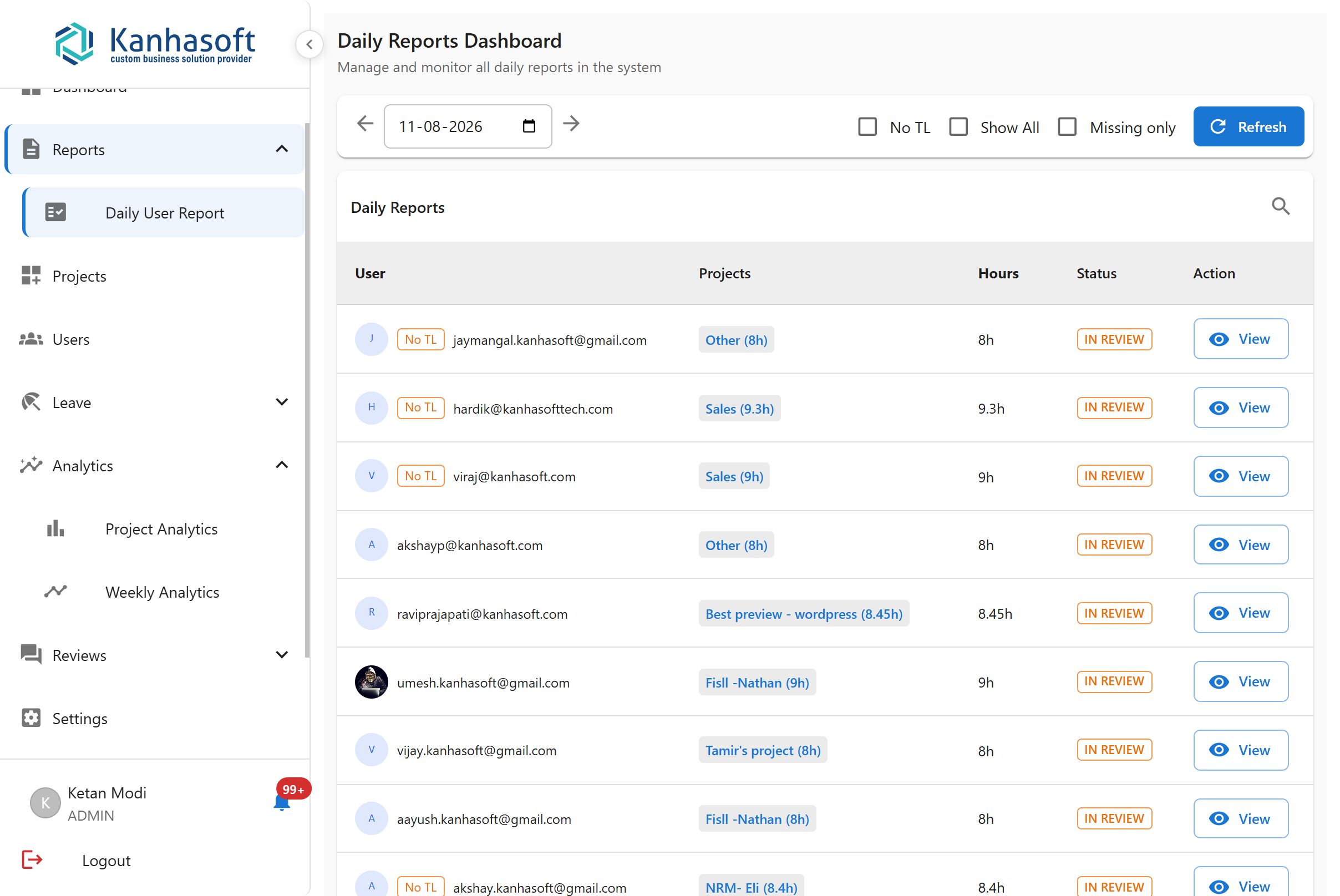
Structured Daily Reporting: Employees can create multiple work entries per day linked to projects and tasks, with hours, descriptions, late-entry indicators, comments, and Draft → Submitted → Approved/Rejected workflows.
Missing Report Tracking: Admins and Team Leads receive dedicated visibility into employees who have not submitted required reports.
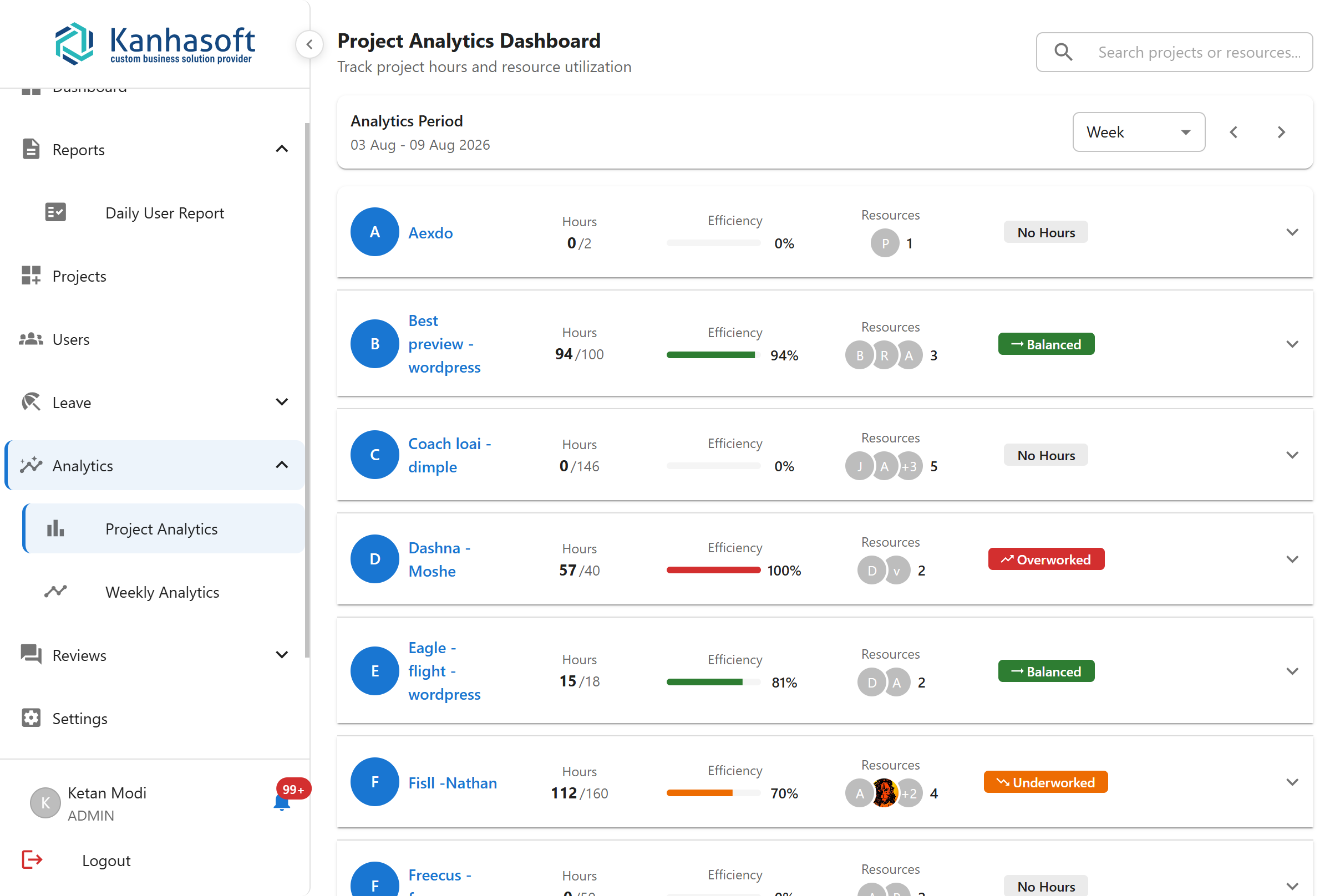
Project & Resource Management: Projects include unique codes, statuses, allocated hours, team members, and Team Leads, while employee assignments store work type, weekly hours, and assignment dates.
Resource Availability: Remaining employee capacity can be monitored through a dedicated resource availability view to support staffing decisions.
Task Management: Project tasks can be linked directly with daily reports, while a separate task module supports assignees, statuses, and threaded comments.
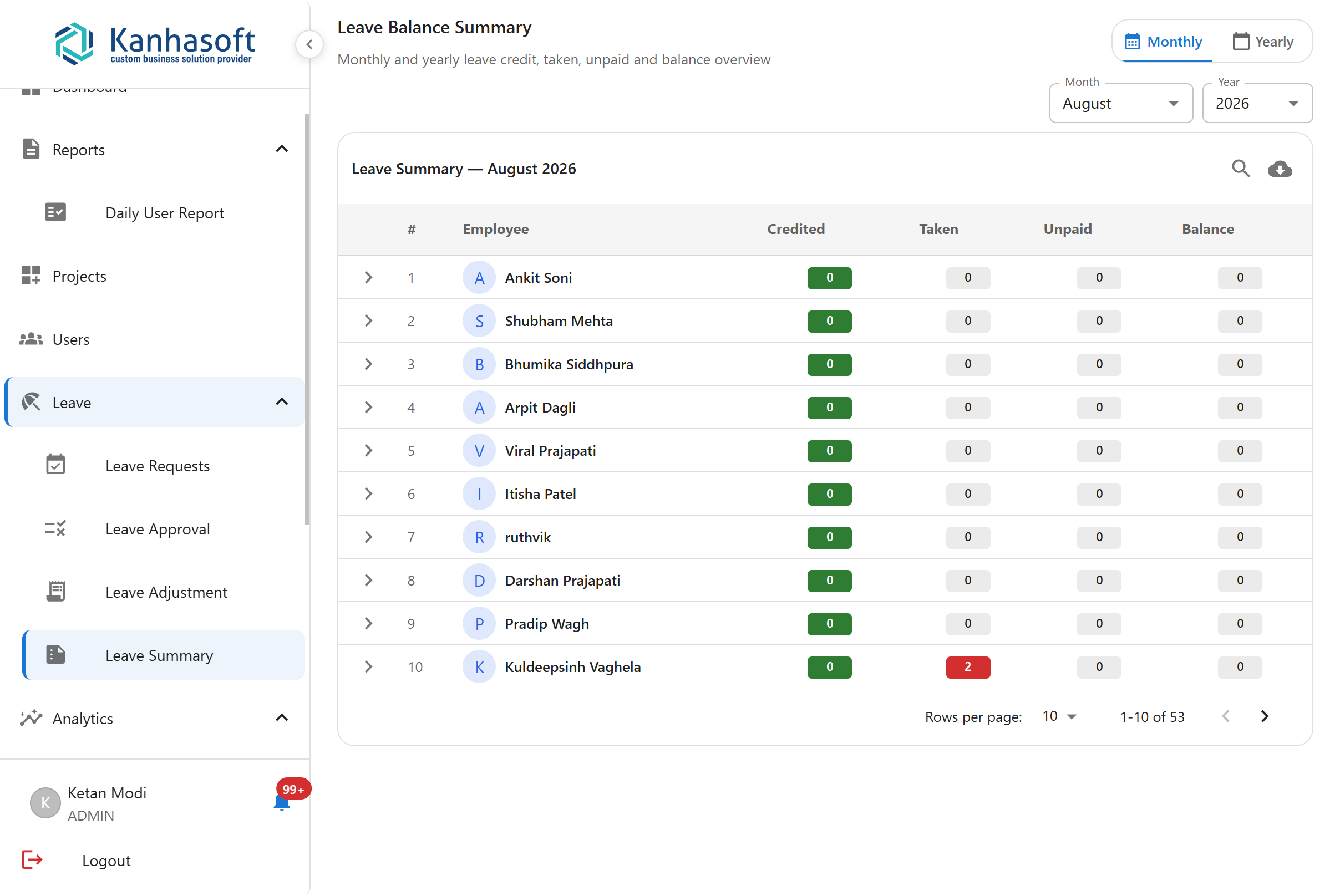
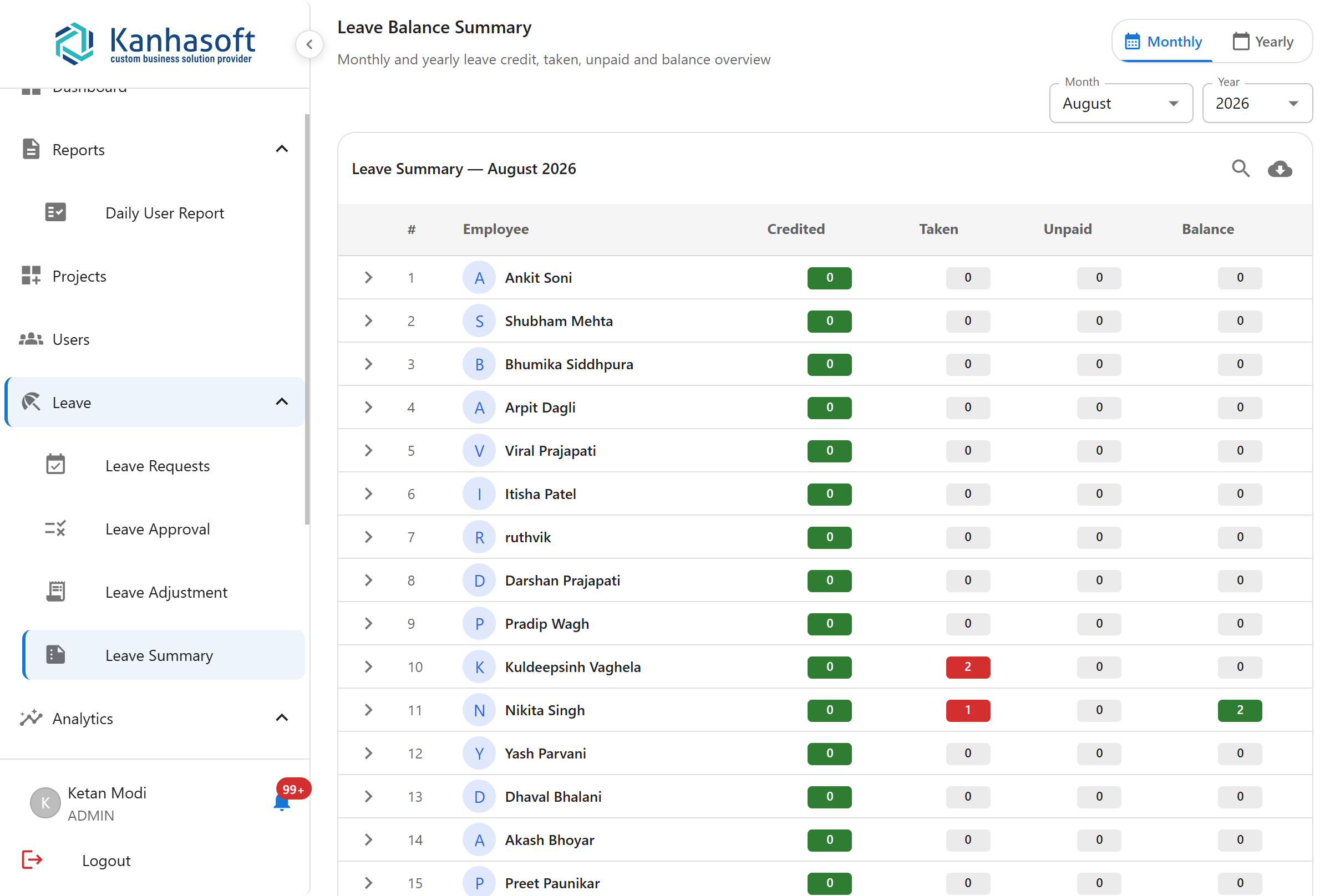
Leave Ledger Management: Leave requests move through approval workflows while credits, debits, adjustments, unpaid days, and monthly accruals are maintained through a structured ledger.
Performance Reviews: Managers can provide positive or negative feedback, optional ratings, project associations, and private or public visibility.
Automated Notifications: Scheduled jobs manage missing-report reminders, pending approval notifications, monthly leave credits, outbound email processing, missing-report digests, and leave auto-approval.
Role-Based Access Control: Admin, Team Lead, HR, and Member roles receive controlled access to relevant modules, data, and actions.
Analytics & Export: Dashboards provide workforce, project, reporting, leave, and performance visibility, with data export to Excel for further analysis.
This solution demonstrates how custom ERP development can centralize workforce reporting, resource planning, approvals, leave, and operational analytics within one structured business platform.
Key Features
Role-based access for Admin, Team Lead, HR, and Member
Daily work reports linked to projects and tasks
Hours and work-description tracking
Draft, Submitted, Approved, and Rejected report statuses
Late report identification
Missing report tracking
Report comments and approval history
Project management with codes and statuses
Project hour allocation
Team member and Team Lead assignment
Full-time, part-time, and flexible resource allocation
Resource capacity and availability tracking
Project-linked task management
General task board with comments
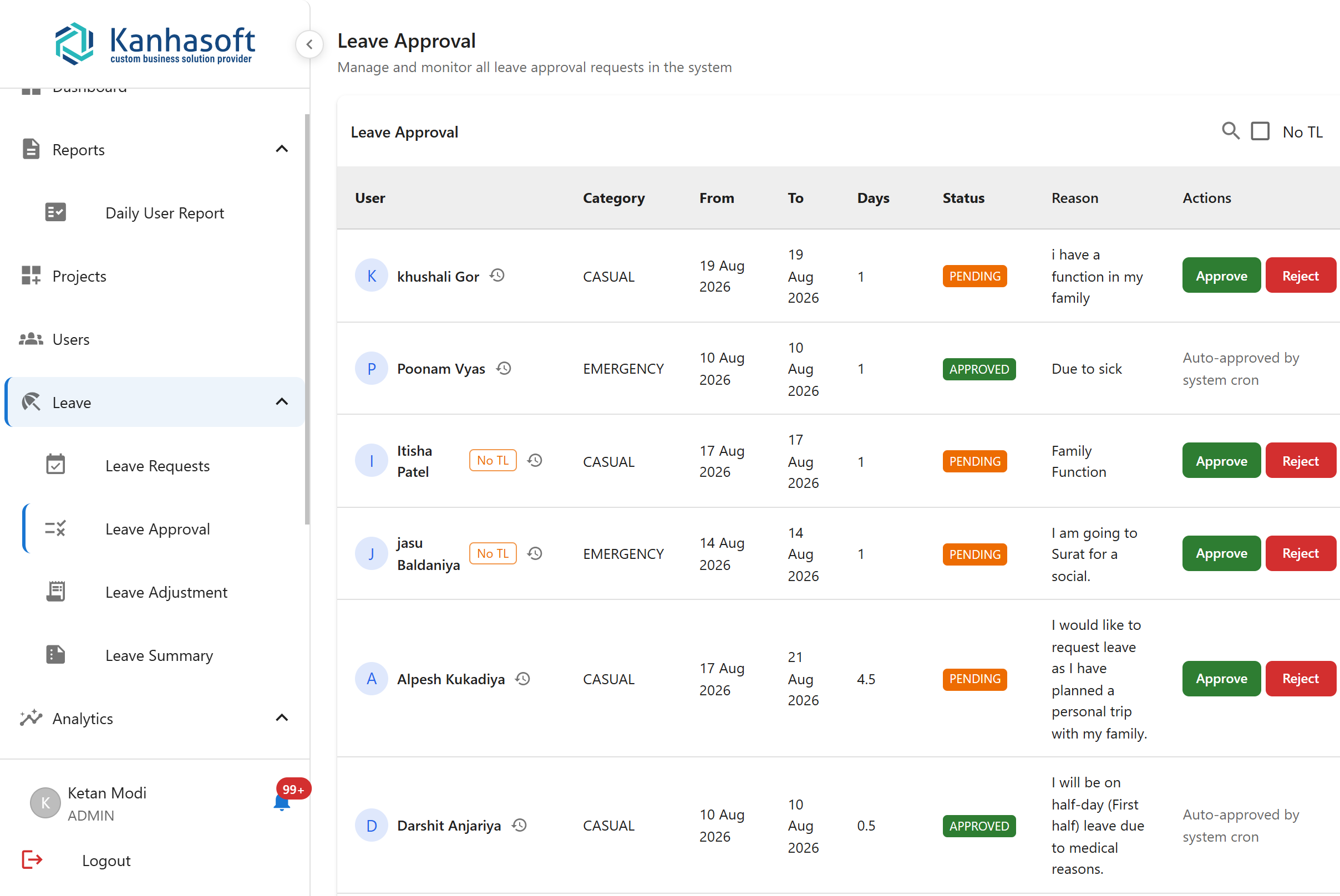
Leave request and approval workflow
Leave ledger with credits, debits, and adjustments
Monthly leave accrual
Unpaid leave tracking
Monthly and yearly leave summaries
Holiday calendar
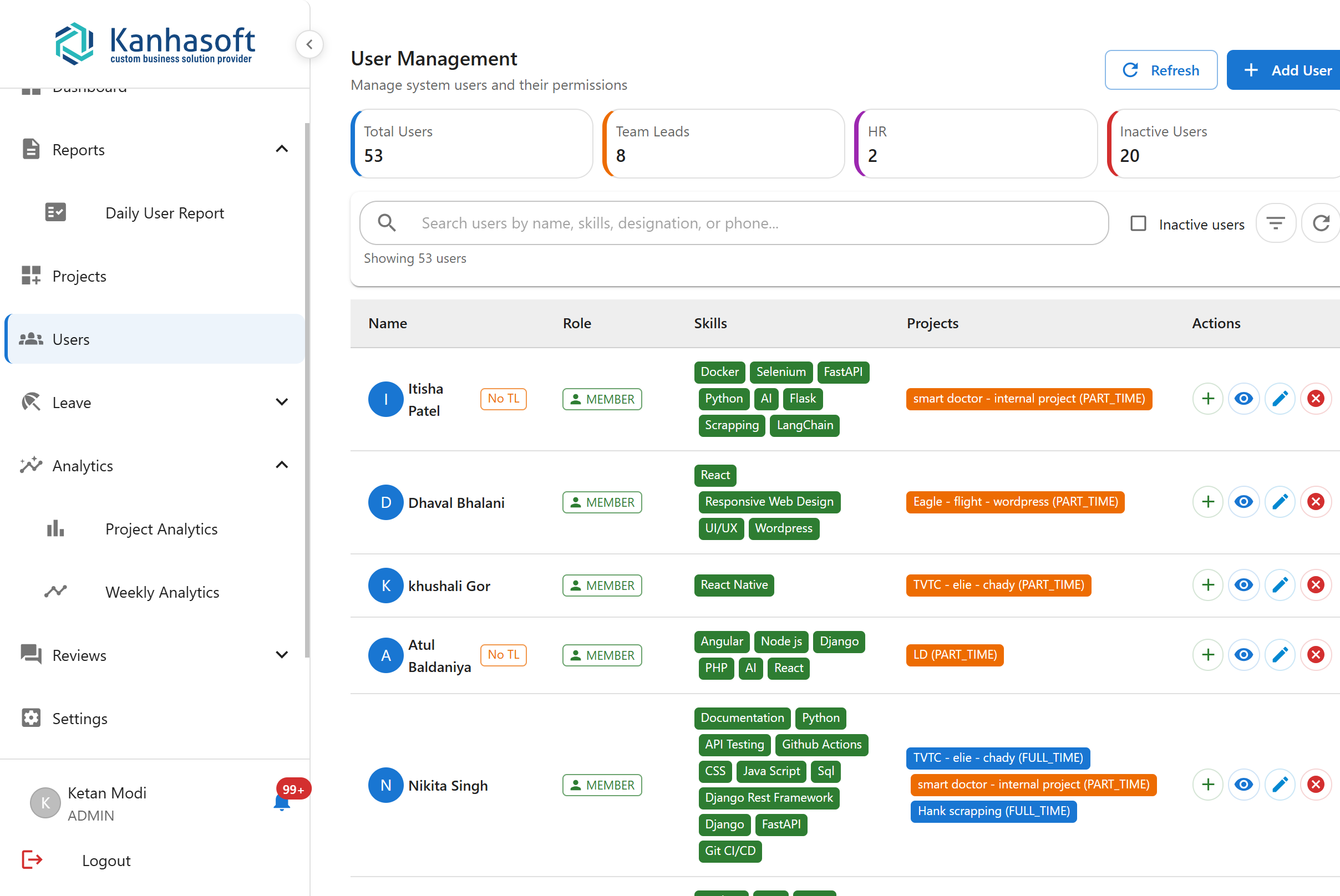
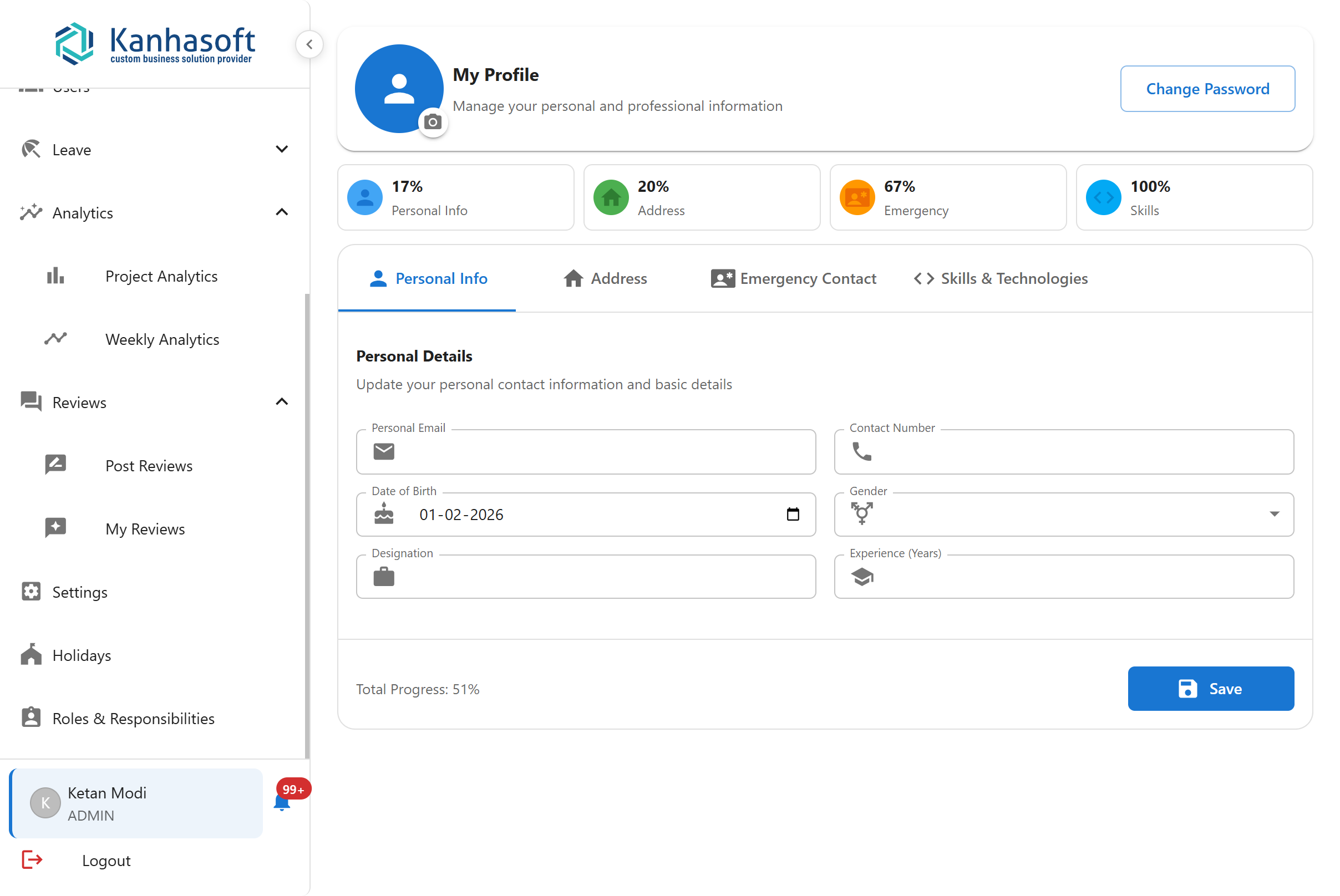
Employee profile management
Employee skills and experience tracking
Performance reviews
Positive and negative feedback
Optional 1–5 review ratings
Private and public review visibility
In-app notifications
Admin broadcast messages
Automated email reminders
Scheduled workflow automation
Missing report digest
Dashboard analytics
Project analytics
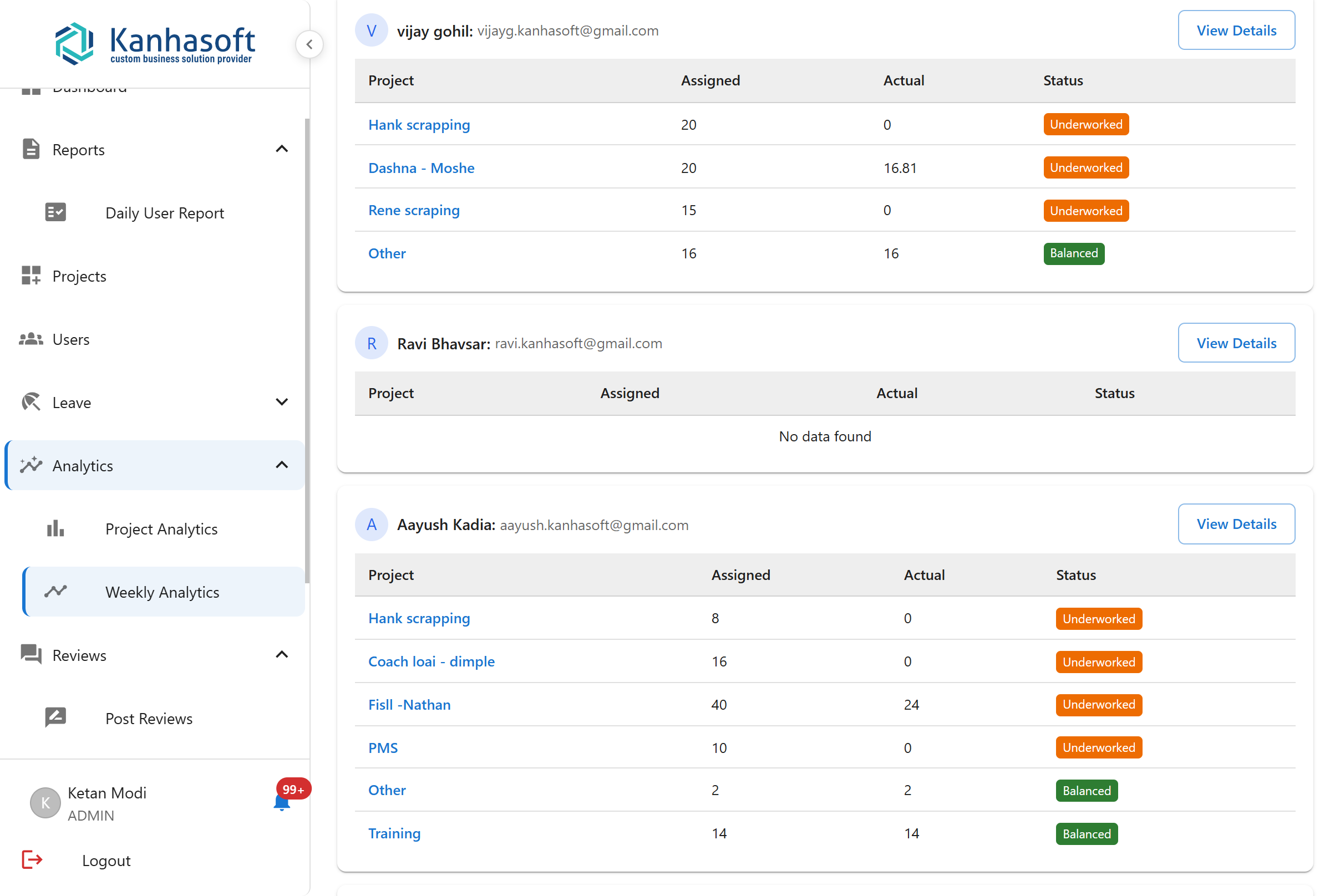
Weekly workforce analytics
Excel export
Password reset using time-limited tokens
Secure JWT authentication
Architecture & Scalability
The platform uses a modular Next.js architecture connected to a PostgreSQL database through Prisma.
Each application request follows a structured flow:
Authenticate → Authorize → Validate → Database
JWT sessions are validated against the current user record, including account status, role, and email information.
The system also includes a database-backed job queue and cron worker for scheduled automation. Email processing, daily report reminders, leave credits, approval reminders, and other recurring activities can therefore operate separately from normal user requests.
Calendar-based information such as report dates, leave periods, and holidays is handled using standardized date logic, while work hours and leave values are stored as decimals to reduce rounding inconsistencies.
User Roles
- Member: Submit daily reports, apply for leave, manage assigned tasks, view permitted reviews, and maintain profile information.
- Team Lead: Review reports, approve or reject leave, manage assigned projects, provide performance reviews, and monitor missing reports.
- HR: Manage workforce information, leave summaries, employee data, and HR-related processes.
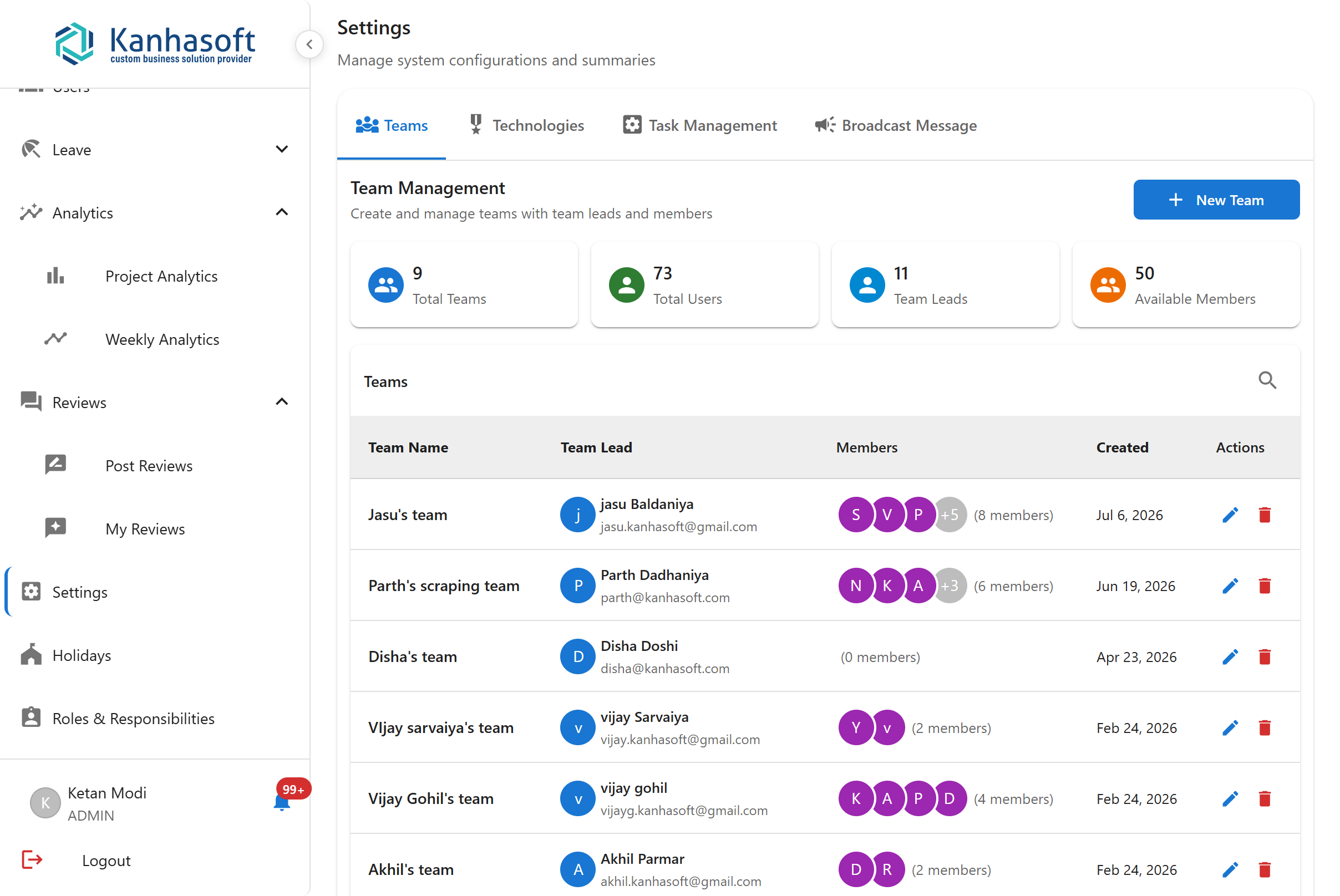
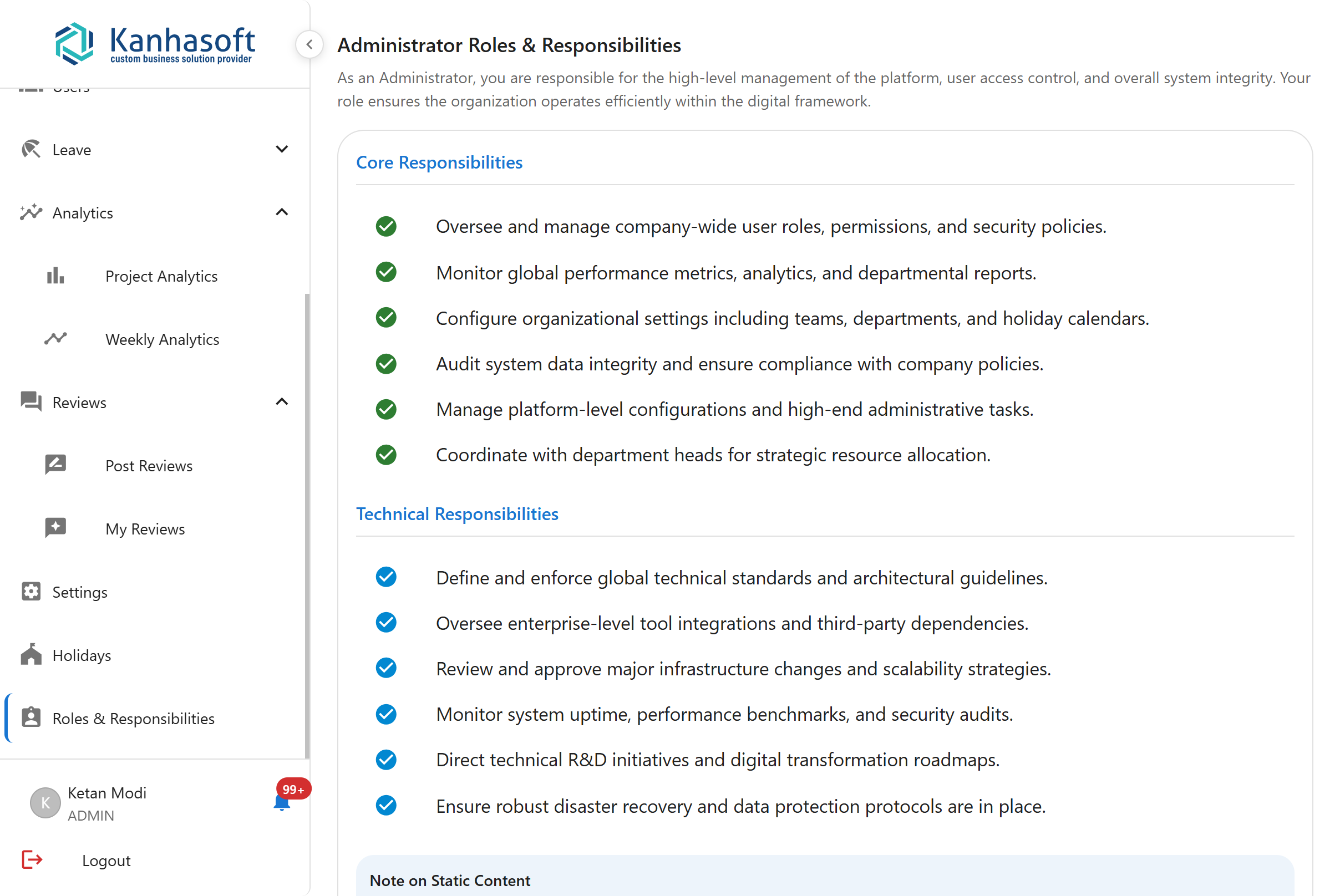
- Admin: Manage users, projects, teams, skills, holidays, leave adjustments, broadcasts, configuration, and full analytics.
Use Cases
This type of workforce operations platform can be suitable for:
- Software development companies
- IT service providers
- Professional services organizations
- Consulting companies
- Digital agencies
- Remote and hybrid teams
- Project-based businesses
- Organizations managing multiple project teams
- Companies replacing Excel-based timesheets
- Businesses requiring integrated leave and resource management
Results & Business Impact
The implementation of the workforce operations and daily reporting platform created several operational improvements:
- Centralized employee work reporting instead of spreadsheets, chat, and email
- Structured approval workflow for daily reports and leave requests
- Automated reminders for missing and pending reports
- Better visibility into project hours and employee activities
- Centralized project assignments and resource availability
- Integrated leave requests, balances, credits, debits, and adjustments
- Improved visibility into employee capacity for project staffing
- Structured employee performance reviews and feedback
- Centralized dashboard visibility for workforce and project operations
- Reduced dependency on manual follow-ups through scheduled automation
- Better synchronization between timesheets, leave, projects, and resource planning
Frequently Asked Questions
Talk To Us
About Your Project