Custom Project Management & Digital Operations Platform for Architecture & Interior Design Firms
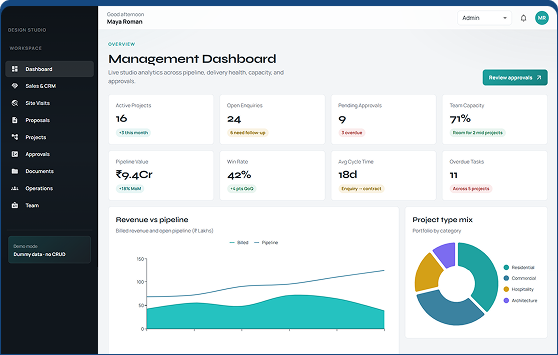
We designed a centralized project management and digital operations platform for architecture and interior design businesses to streamline sales, client management, site visits, design workflows, project execution, approvals, resources, documents, and reporting. This custom business management platform enables management and project teams to manage enquiries, proposals, contracts, design stages, tasks, resources, and project activities within one structured system. Built around connected workflows and role-based operations, the platform improves collaboration, reduces dependency on manual tracking, and provides better visibility across the complete client-to-project lifecycle.

6 Months

UAE
What Is a Project Management & Digital Operations Platform?
A project management and digital operations platform is a centralized system that helps architecture and interior design businesses manage client enquiries, site visits, proposals, contracts, design stages, approvals, projects, tasks, documents, resources, communication, and reporting within one connected workflow.
Project Brief
The Project Management & Digital Operations Platform is a centralized, web-based solution designed to streamline sales, design workflows, project execution, resource management, and operational reporting for architecture and interior design businesses. The system connects CRM, site visits, proposals, contracts, design stages, projects, documents, approvals, and team activities within one structured environment.
The objective was to create a unified digital operating platform that allows management, designers, project teams, finance, and external resources to collaborate efficiently while maintaining clear roles and permissions. The platform ensures continuity from client enquiry through project delivery, reduces duplicate data entry, improves cross-department visibility, and supports more structured business operations.
Technologies
-

React JS
-
Next JS
-

Node JS
-

AI/ML
-

TypeScript
-

PostgreSQL
-
Auth.js
-

AWS
Client's Need
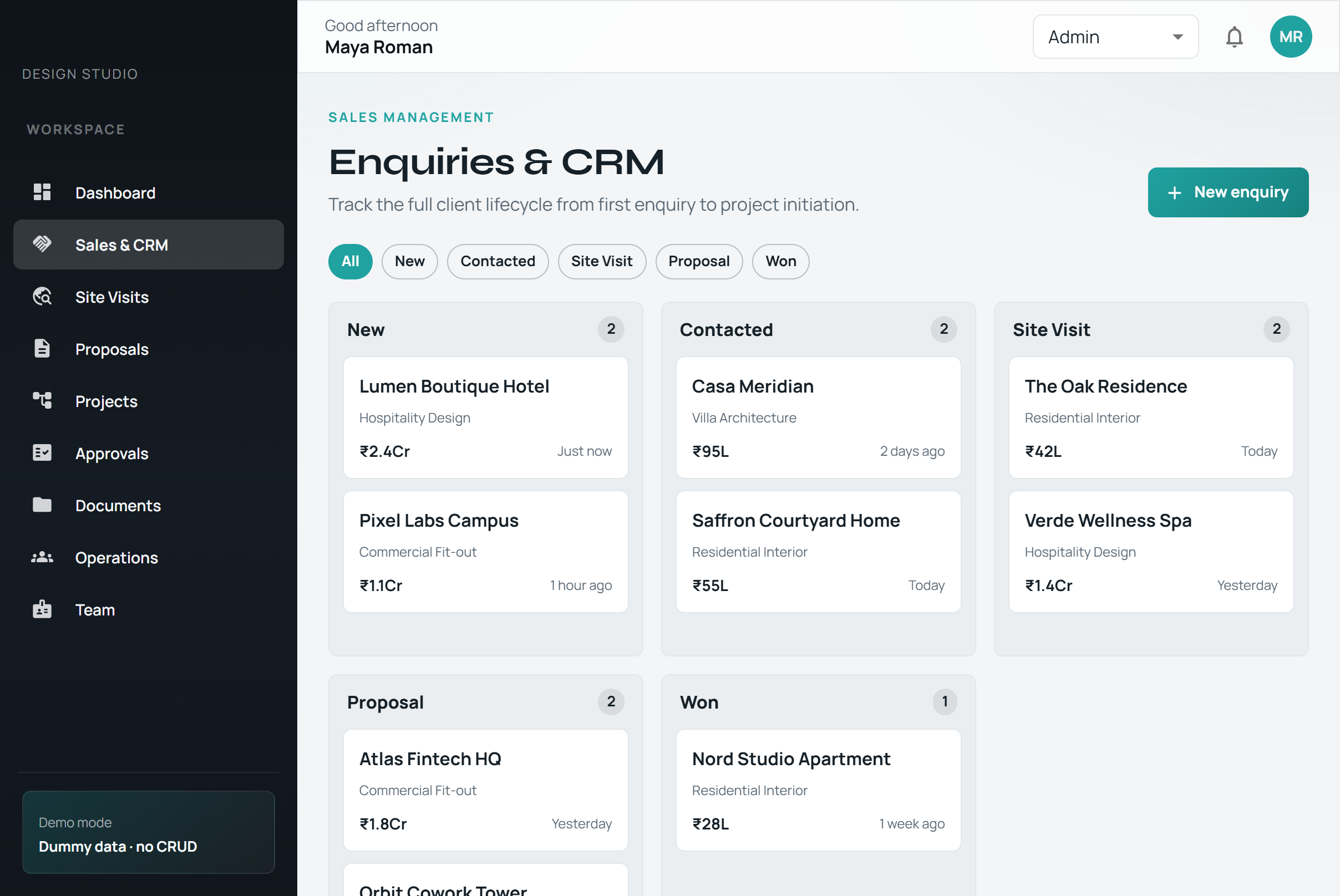
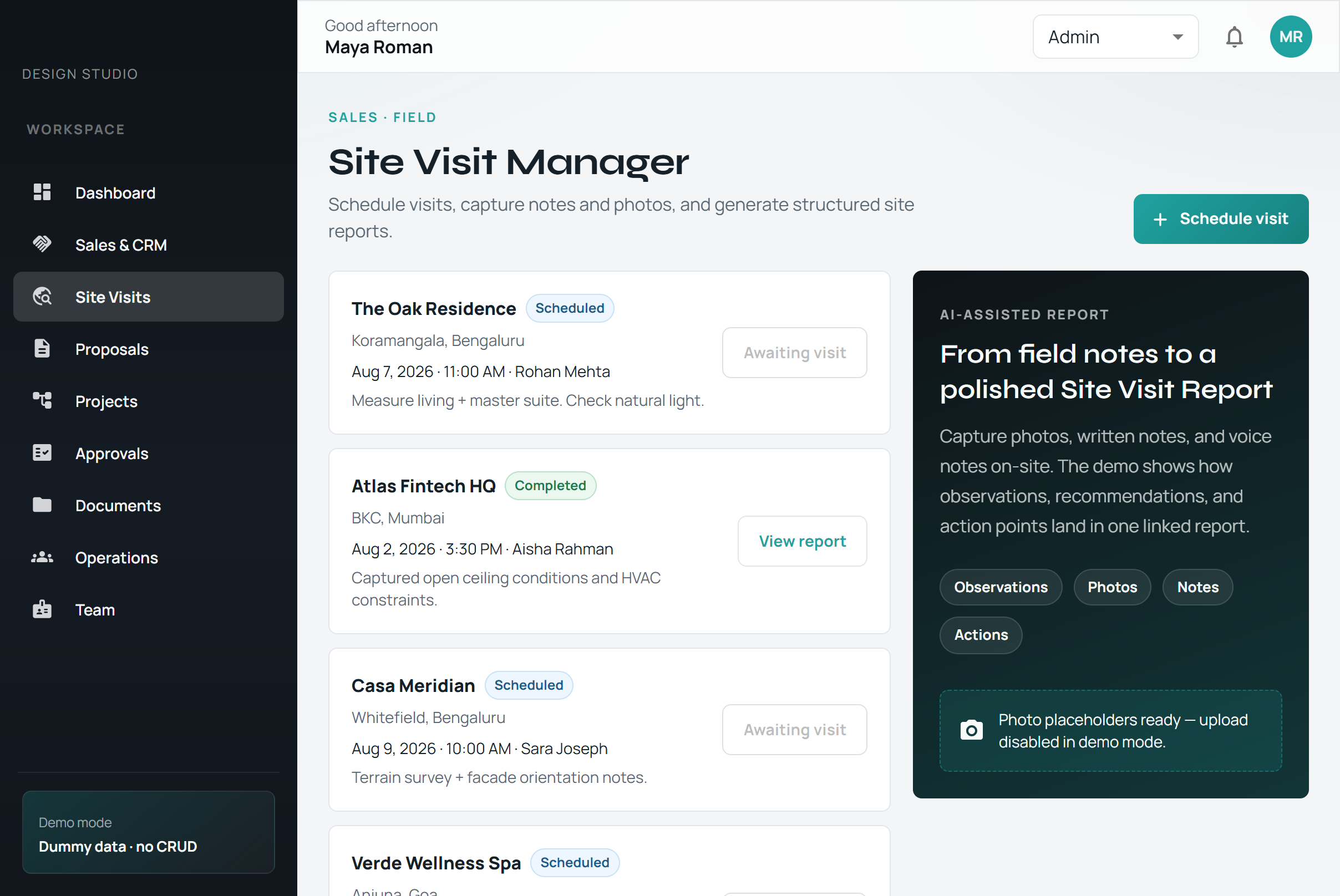
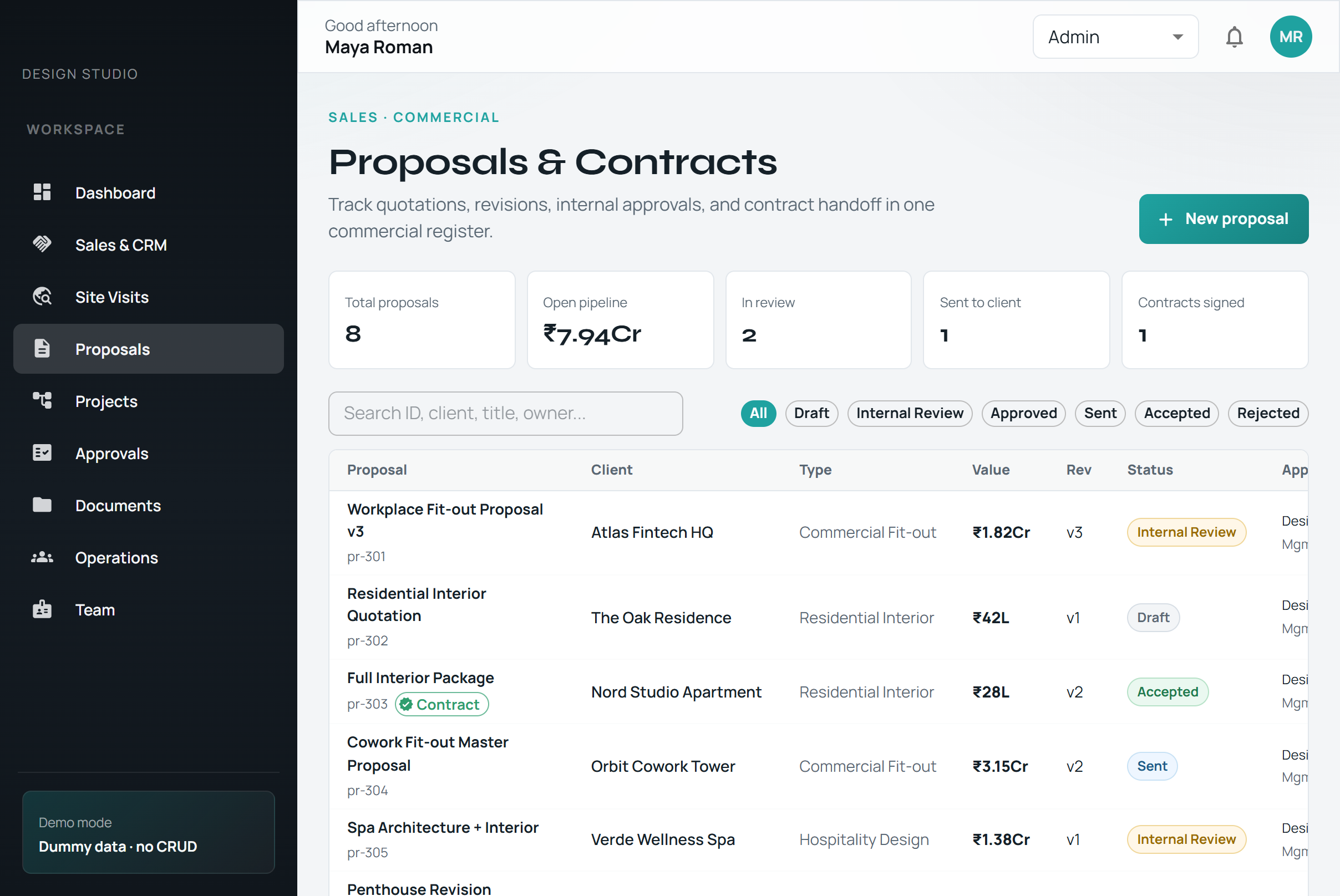
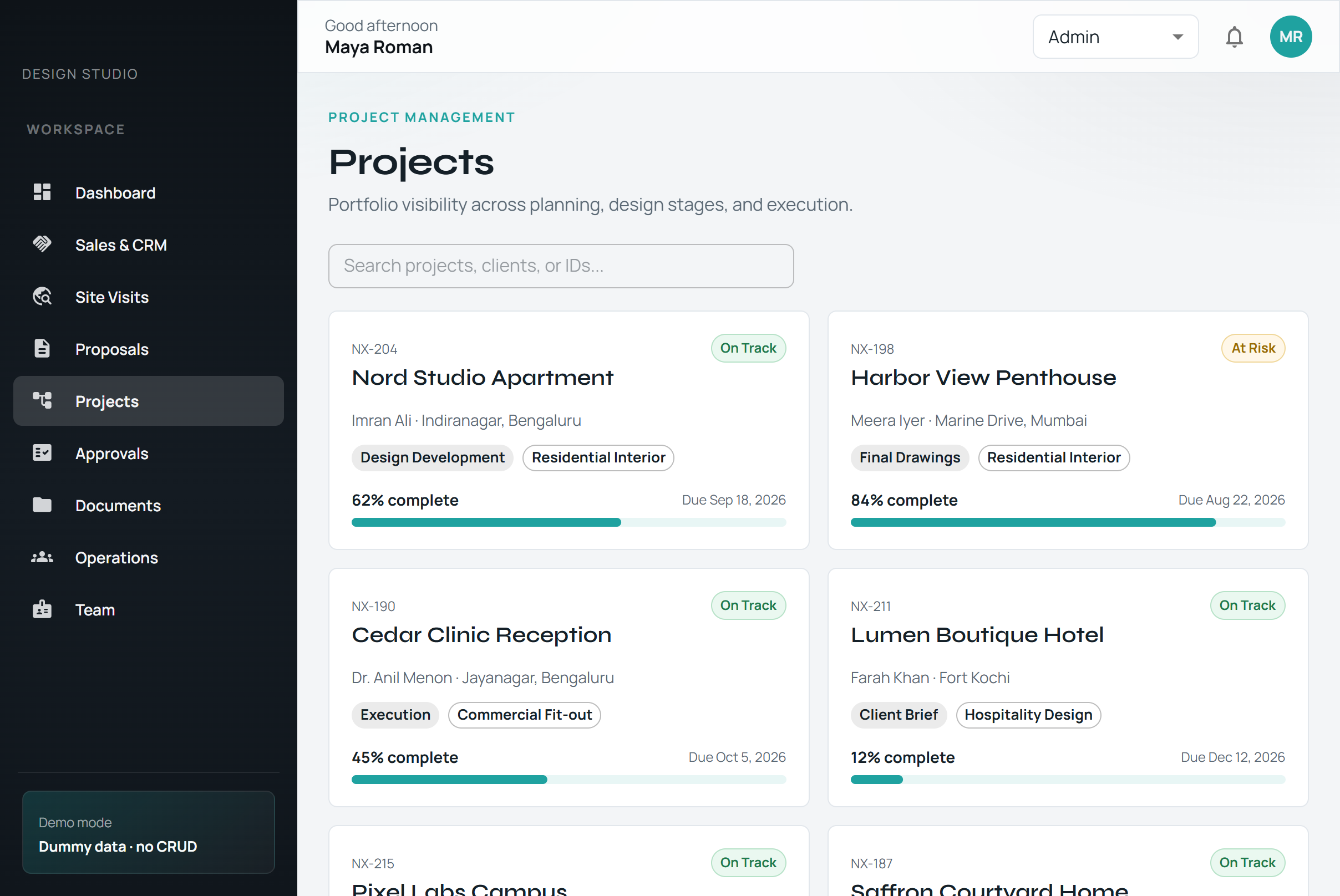
Build a Digital Operating System Around Your Actual Business Workflow
Architecture and interior design businesses rarely struggle because they lack another standalone task management tool. The larger challenge is connecting client enquiries, site visits, proposals, contracts, design approvals, drawings, tasks, resources, deadlines, communication, and management reporting into one structured workflow.
A custom digital operations platform can bring those activities together while preserving the processes that are specific to the organization.
Kanhasoft can help with workflow discovery, business analysis, UI/UX planning, architecture design, custom project management software development, integrations, testing, deployment, and ongoing enhancement.

Challenges
Disconnected Business Workflows: Sales, design, project execution, operations, and finance relied on separate processes, creating repeated data transfers and limited cross-department visibility.
Manual Tracking Dependency: Projects, tasks, approvals, and resource assignments were difficult to monitor consistently without structured workflows and centralized dashboards.
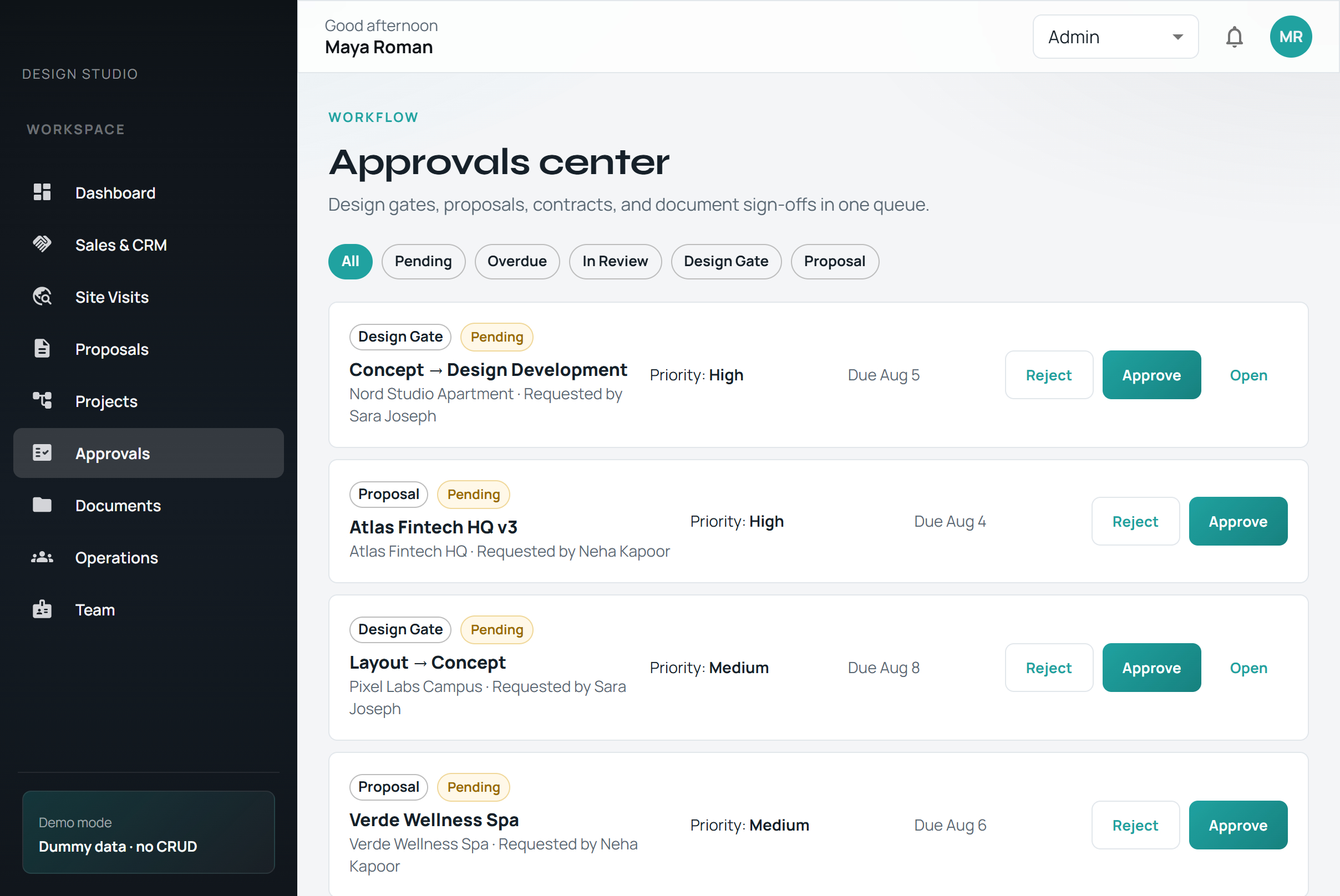
Design Approval Control: Lack of mandatory approval gates could allow design stages to progress before required internal or client approvals were completed.
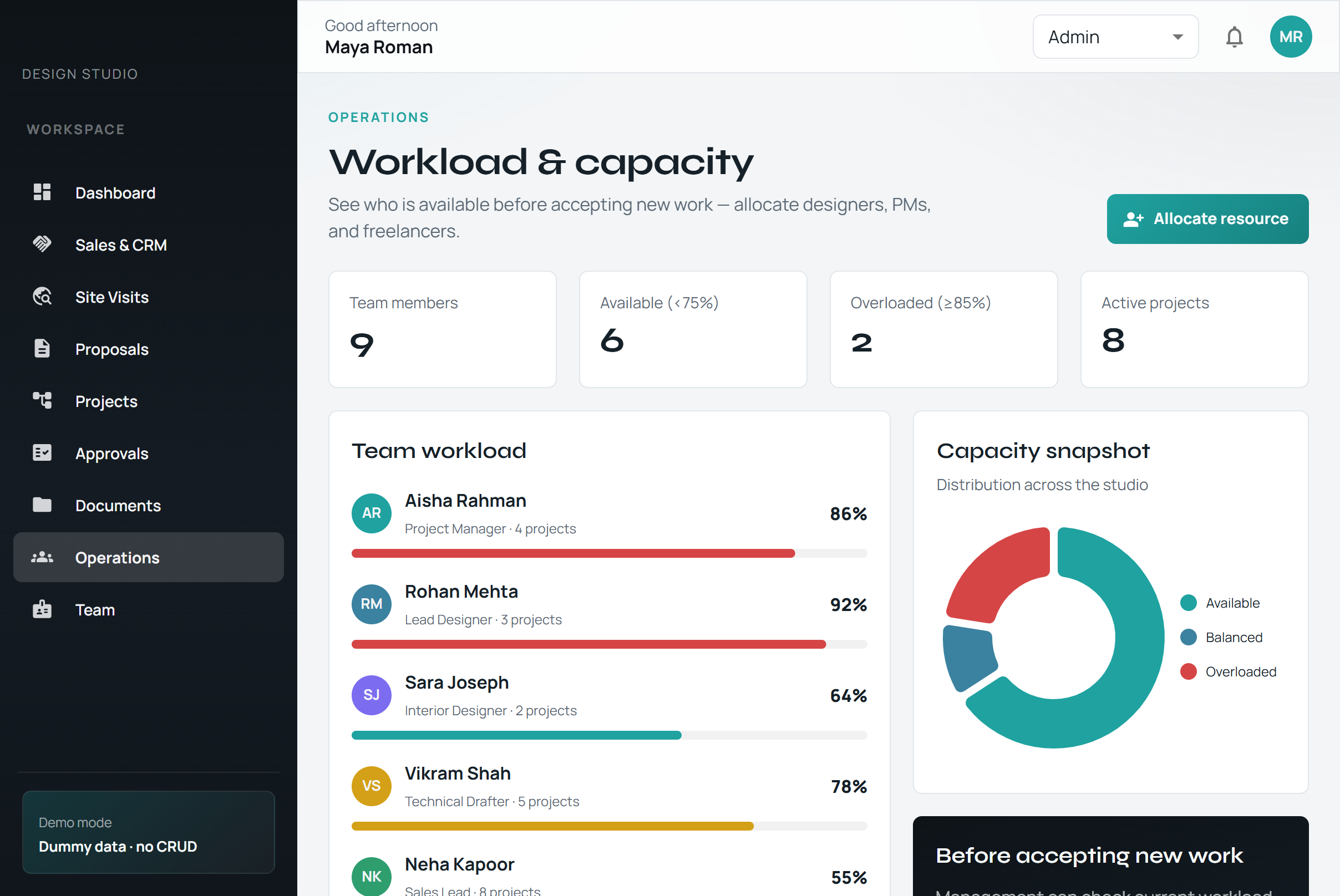
Limited Resource Visibility: Designers, project managers, technical staff, and freelancers worked across multiple projects, making workload balancing and capacity planning difficult.
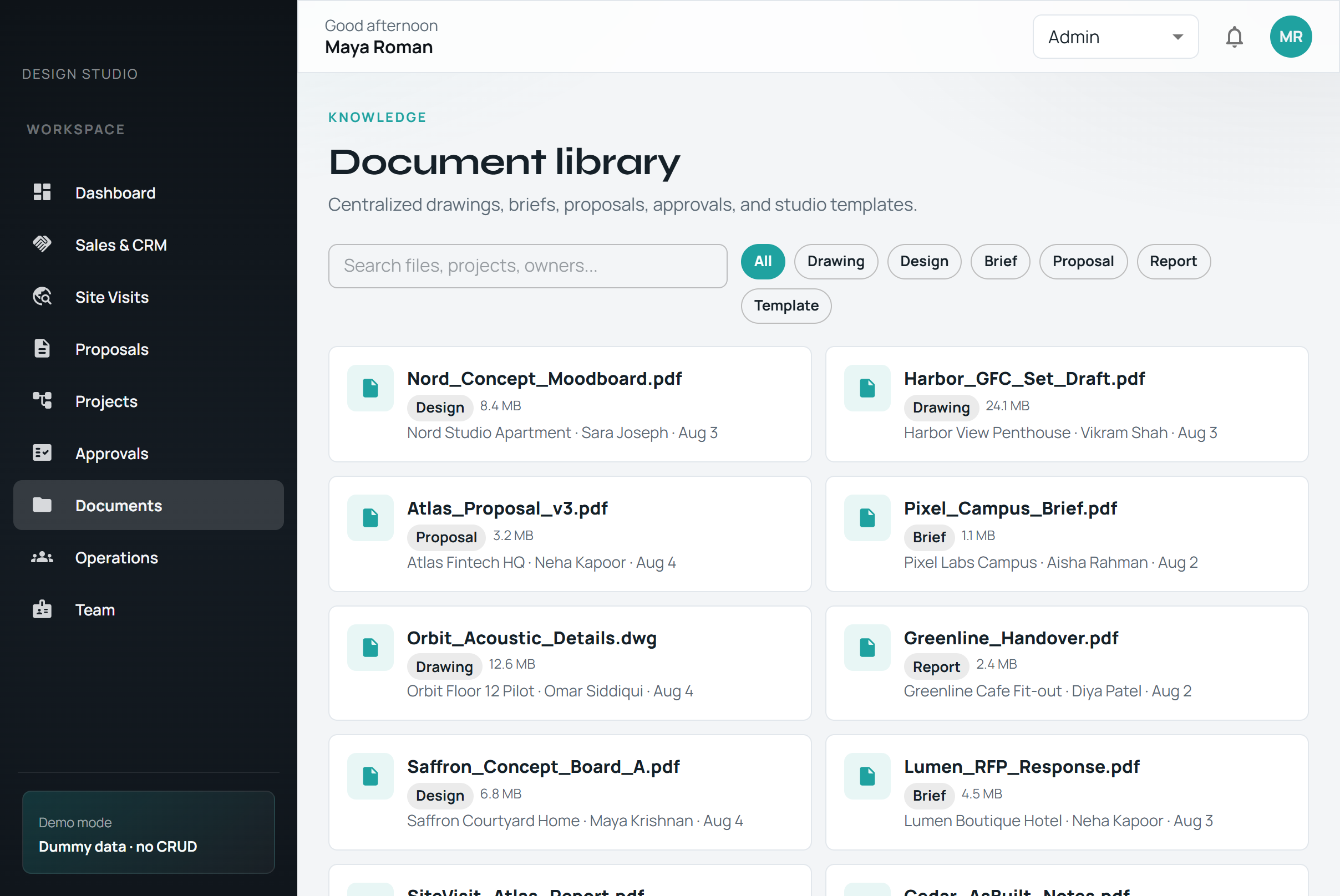
Scattered Project Documentation: Drawings, approvals, reports, comments, and project records stored across different locations reduced accessibility and project visibility.
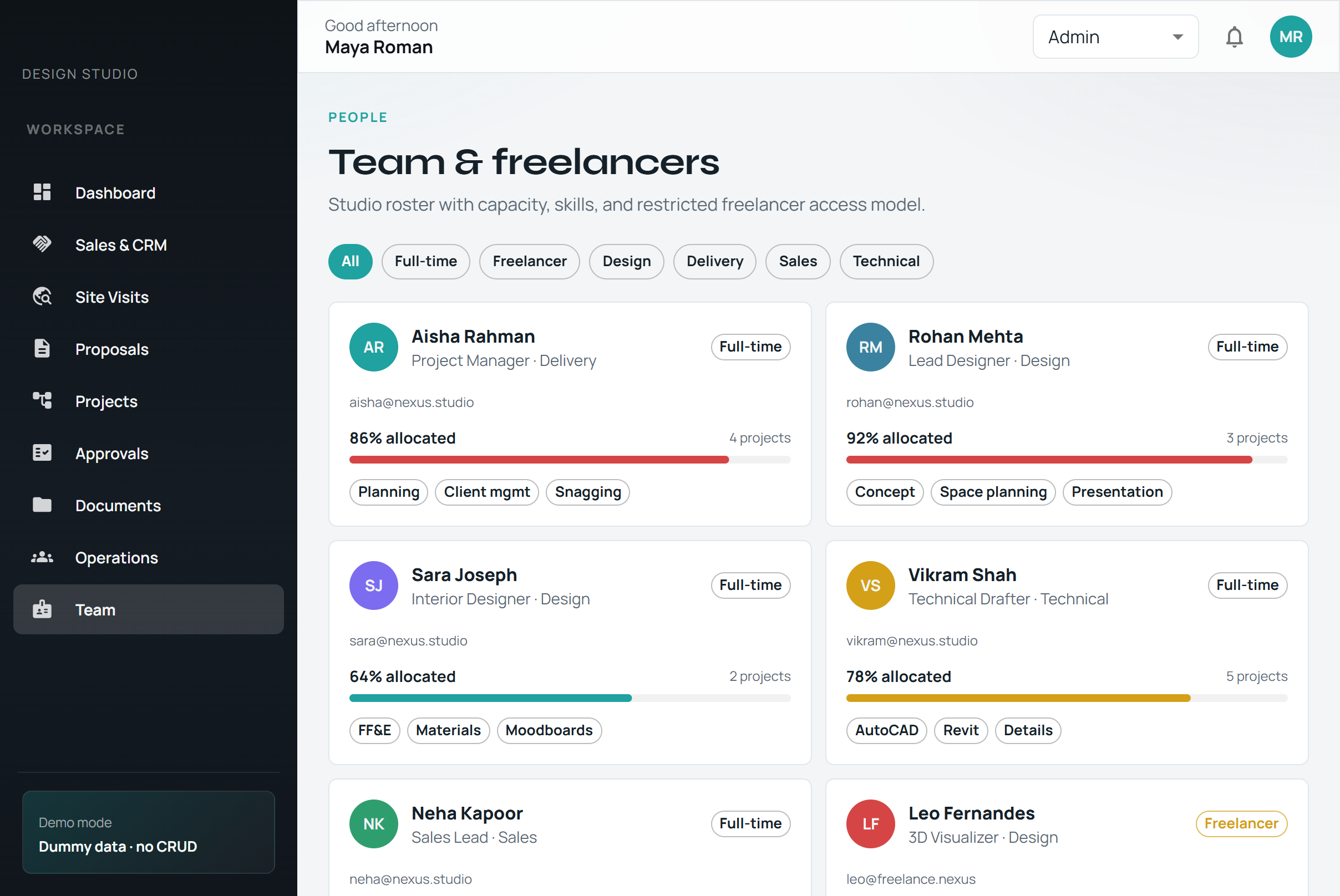
Freelancer Access Management: External resources required controlled access to assigned projects and tasks without exposing unrelated business information.
Unstructured Site Visit Information: Photos, notes, voice recordings, observations, and action points collected during site visits needed to be converted into structured, project-linked reports.
A centralized project management and digital operations platform helps architecture and interior design businesses standardize workflows, control approvals, manage resources, centralize project information, and improve visibility across the complete client-to-project lifecycle.
Solutions
Unified CRM-to-Project Workflow: Connect client enquiries, CRM follow-ups, site visits, proposals, approvals, contracts, automatic project creation, design management, project execution, and project close-out within one continuous workflow.
Automatic Project Creation: Once a contract is finalized, the system creates the project and carries relevant client, scope, proposal, contract, discussion, and site information into the project workspace.
Stage-Based Design Management: Manage each design stage through dedicated workspaces containing tasks, documents, comments, communication, progress updates, and approval status.
Mandatory Design Gate Approvals: Prevent projects from progressing to the next design stage until required approvals have been completed.
Centralized Project Management: Manage project timelines, milestones, responsibilities, tasks, deadlines, communication, documents, and progress from one platform.
Automated Notifications & Reminders: Generate alerts for pending approvals, upcoming deadlines, assigned tasks, and delayed activities.
Resource & Capacity Management: Monitor team workloads, project assignments, resource availability, and future capacity to support better allocation decisions.
Role-Based Access Control: Provide controlled permissions for Managing Directors, Design Directors, Project Managers, Interior Designers, CAD Technicians, Finance Teams, Administrators, and Freelancers.
Centralized Document & Activity Management: Keep drawings, approvals, reports, comments, project records, and related activities connected with the appropriate project.
This solution demonstrates how custom CRM development and custom ERP development can be combined to create a structured digital operations platform for architecture and interior design businesses.
Key Features
Client enquiry management
Centralized CRM and client profiles
Client communication history
Follow-up tracking
Site visit scheduling
Team member assignment
Mobile site information capture
Site photographs
Written and voice notes
AI-assisted Site Visit Reports
Proposal and quotation management
Quotation revision history
Internal proposal approval workflows
Contract management
Signed document storage
Automatic project creation
Sales-to-project data transfer
Design stage management
Mandatory Design Gate approvals
Project planning
Project timelines
Milestone management
Task assignment
Task deadlines
Progress monitoring
Delay identification
Centralized drawing and document management
Project comments and discussions
Activity tracking
Automated notifications
Deadline reminders
Team workload management
Resource allocation
Freelancer management
Restricted freelancer permissions
Resource capacity planning
KPI monitoring
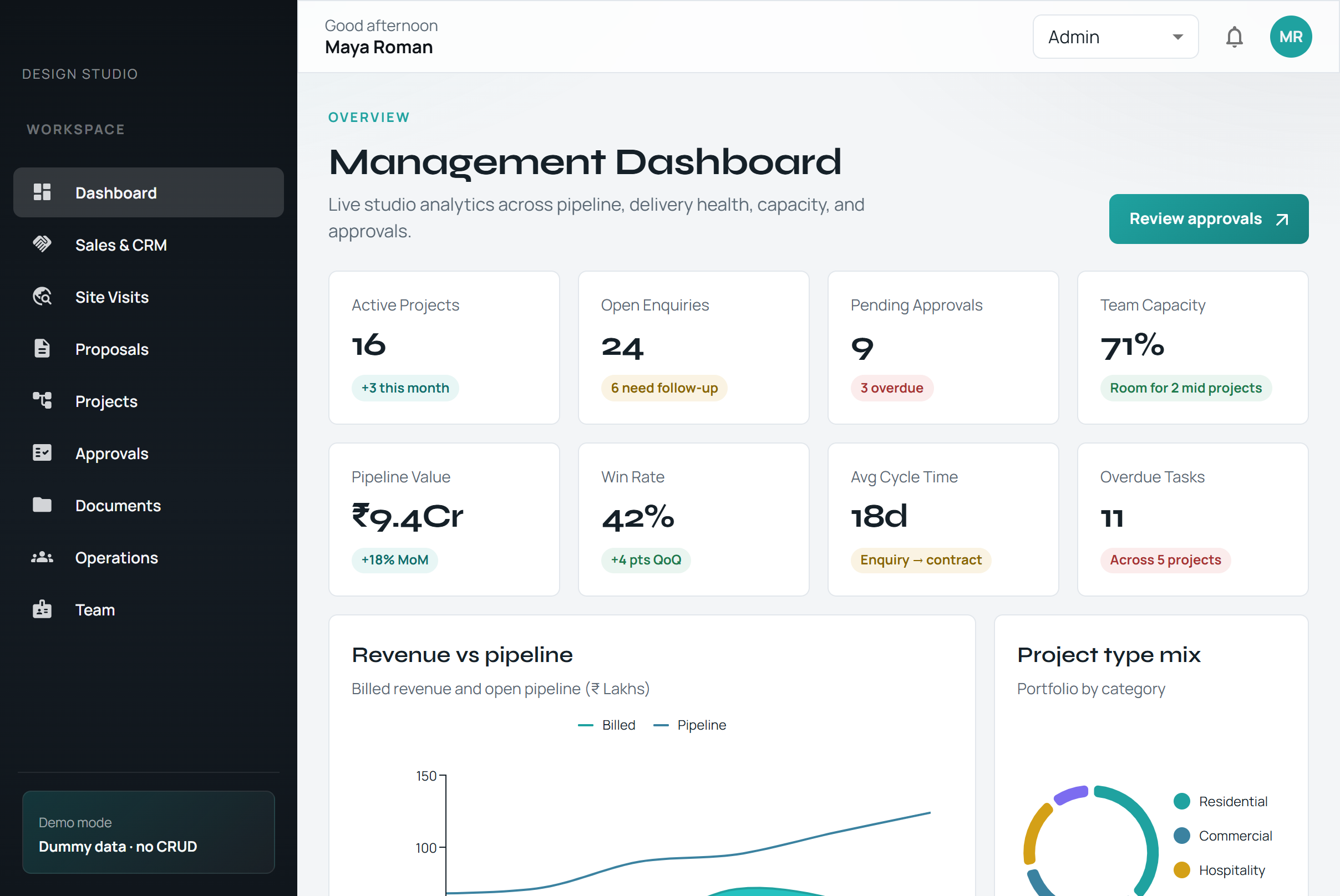
Management dashboards
Role-based access control
Search and filtering
Audit history
Mobile-responsive interface
Integration capabilities
Architecture & Scalability
The platform is designed as a centralized digital operating system connecting sales, design, projects, operations, resources, and management reporting.
Role-based permissions create controlled experiences for different departments and external users.
Workflow automation and Design Gate approvals provide process governance, while centralized project and document management creates a consistent information structure.
The platform also requires search, filtering, audit history, mobile-responsive access, notifications, and integration capabilities.
The final software architecture and technology stack will be determined during the system design phase based on confirmed requirements and future scalability considerations.
The documented development approach includes business analysis, system design, software development, testing, user acceptance testing, deployment, training, technical documentation, and go-live support.
Results & Business Impact
The completed project management and digital operations platform is expected to deliver several key business improvements:
- Standardized workflows across sales, design, project execution, operations, finance, and external resources
- Better visibility into project timelines, milestones, tasks, approvals, and overall progress
- Improved resource planning through workload, availability, and capacity visibility
- Reduced dependency on spreadsheets, manual tracking, and individual follow-ups
- Better collaboration between management, designers, project managers, finance teams, technical staff, and freelancers
- Real-time dashboards and KPI monitoring for more informed operational and financial decisions
- Centralized project data, documents, activities, and communication
- A scalable digital operating model designed to support future business growth with more structured and consistent processes
Use Cases
A platform with this structure can be suitable for:
- Architecture firms
- Interior design studios
- Design and build companies
- Engineering consultancies
- Construction design teams
- Project-based professional service businesses
- Companies managing internal and freelance resources
- Businesses requiring stage-based approvals
- Organizations replacing spreadsheets and disconnected project tools
- Companies needing integrated CRM and project management
Frequently Asked Questions
Talk To Us
About Your Project