Custom Real Estate CRM & Lead Management Platform for Residential Property
We developed an end-to-end real estate CRM and lead management platform designed for residential property businesses to connect property discovery, website inquiries, lead nurturing, property tours, and deal management within one centralized system. This custom real estate CRM platform enables agents and managers to capture website leads, manage contacts, track pipeline stages, schedule property tours, monitor follow-ups, and convert qualified leads into deals through a structured workflow. By combining a public-facing property website with an internal CRM workspace, the platform reduces dependence on spreadsheets, emails, calendars, and disconnected sales tools while improving visibility across the complete buyer-to-deal journey.

7 Months

USA
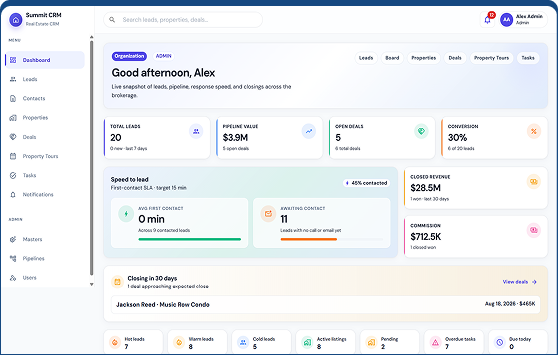
What Is a Real Estate CRM System?
A real estate CRM system is a centralized platform that helps agents, brokers, and property teams manage property inquiries, leads, contacts, follow-ups, tours, activities, pipeline stages, and deals while connecting website-based property discovery directly with the sales workflow.
Project Brief
The Real Estate CRM & Lead Management Platform is a web-based solution designed to streamline property discovery, lead management, and deal tracking for residential real estate teams. The system connects a public-facing property website with a centralized custom CRM platform, allowing potential buyers to browse listings, submit inquiries, and enter a structured sales workflow without relying on disconnected emails, spreadsheets, calendars, or separate sales tools.
The objective was to build a focused, configurable CRM that allows agents, managers, and administrators to manage leads, schedule property tours, track pipeline stages, assign tasks, and convert qualified opportunities into deals. The platform also provides managers with visibility into pipeline activity and agent performance while supporting role-specific experiences and US residential real estate workflows.
Technologies
-

React JS
-

Next JS
-

TypeScript
-

Material UI (MUI)
-

Prisma ORM
-

SQLite
-

Auth.js
-

AI/ML
The application uses Next.js for both frontend and backend functionality, helping keep the initial architecture compact and suitable for fast MVP development.
Businesses considering a similar JavaScript-based architecture can also explore Kanhasoft’s Next.js development services.
Client's Need
The client required a full-featured real estate CRM system capable of connecting property discovery, lead capture, sales activities, property tours, and deal management within one centralized workflow:
Building a Real Estate CRM Around Your Actual Sales Workflow
A useful real estate CRM is not simply a database of buyers and properties. It should connect the stages where opportunities are usually lost: property inquiries, agent response, follow-up, tours, pipeline movement, tasks, and deal progression.
This project demonstrates how those activities can be brought together within a focused web platform while keeping the first release practical and extensible.
If your real estate team currently manages website inquiries, property visits, follow-ups, and deals across several tools, Kanhasoft can help evaluate the workflow and define a practical CRM architecture before development begins.

Challenges
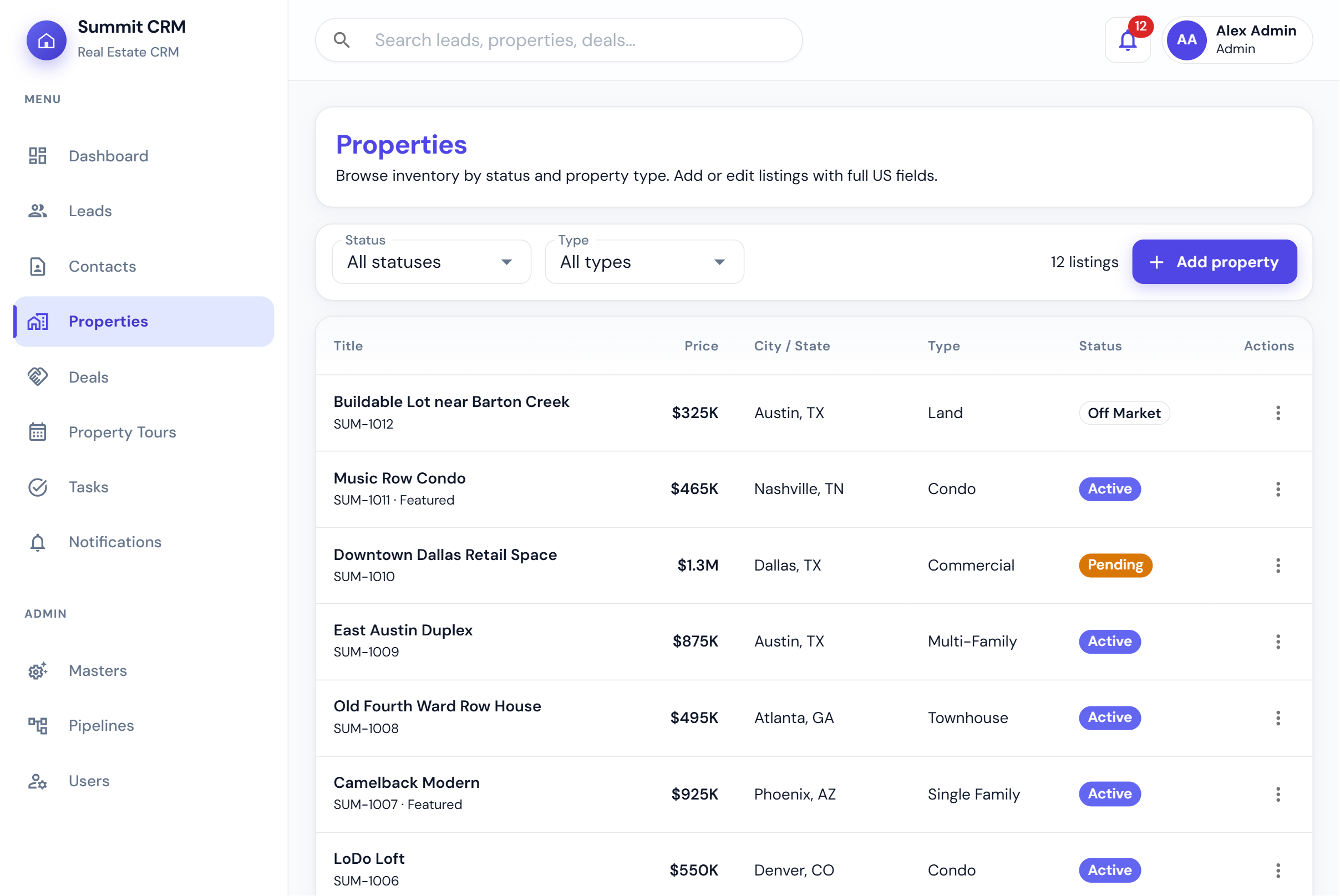
Fragmented Lead Management: Property inquiries were scattered across emails, spreadsheets, and individual agent workflows, making lead tracking inconsistent.
Slow Lead Response: Delays in locating, assigning, and responding to new inquiries increased the risk of losing potential buyers.
Limited Pipeline Visibility: Without a structured sales pipeline, teams struggled to identify which leads were new, contacted, actively viewing properties, or moving toward a deal.
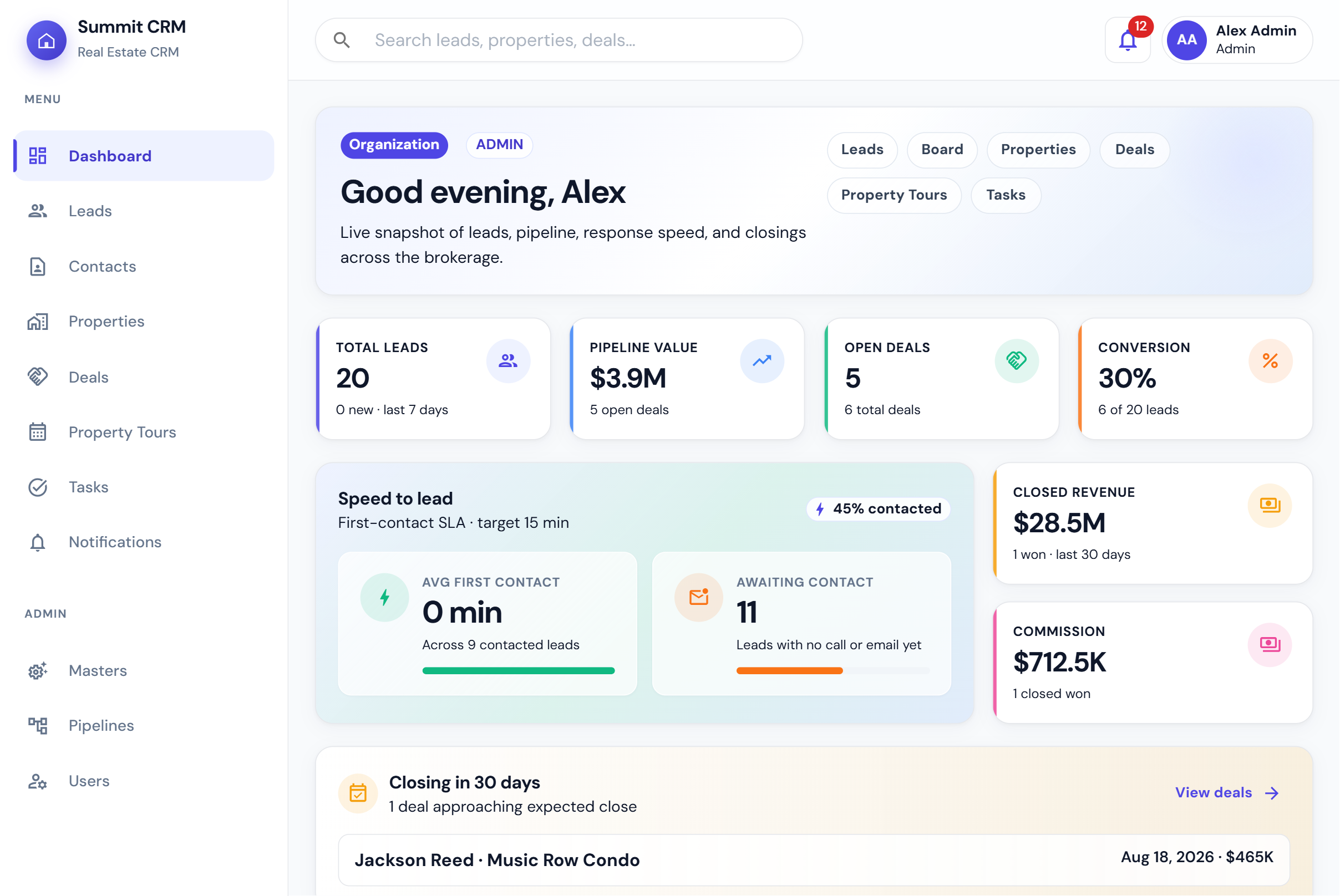
Limited Management Insights: Managers lacked a clear view of lead conversion activity, pipeline value, speed-to-lead, and agent performance.
Performance Issues: Background tasks affected page performance and needed to be moved to asynchronous execution to keep the CRM responsive.
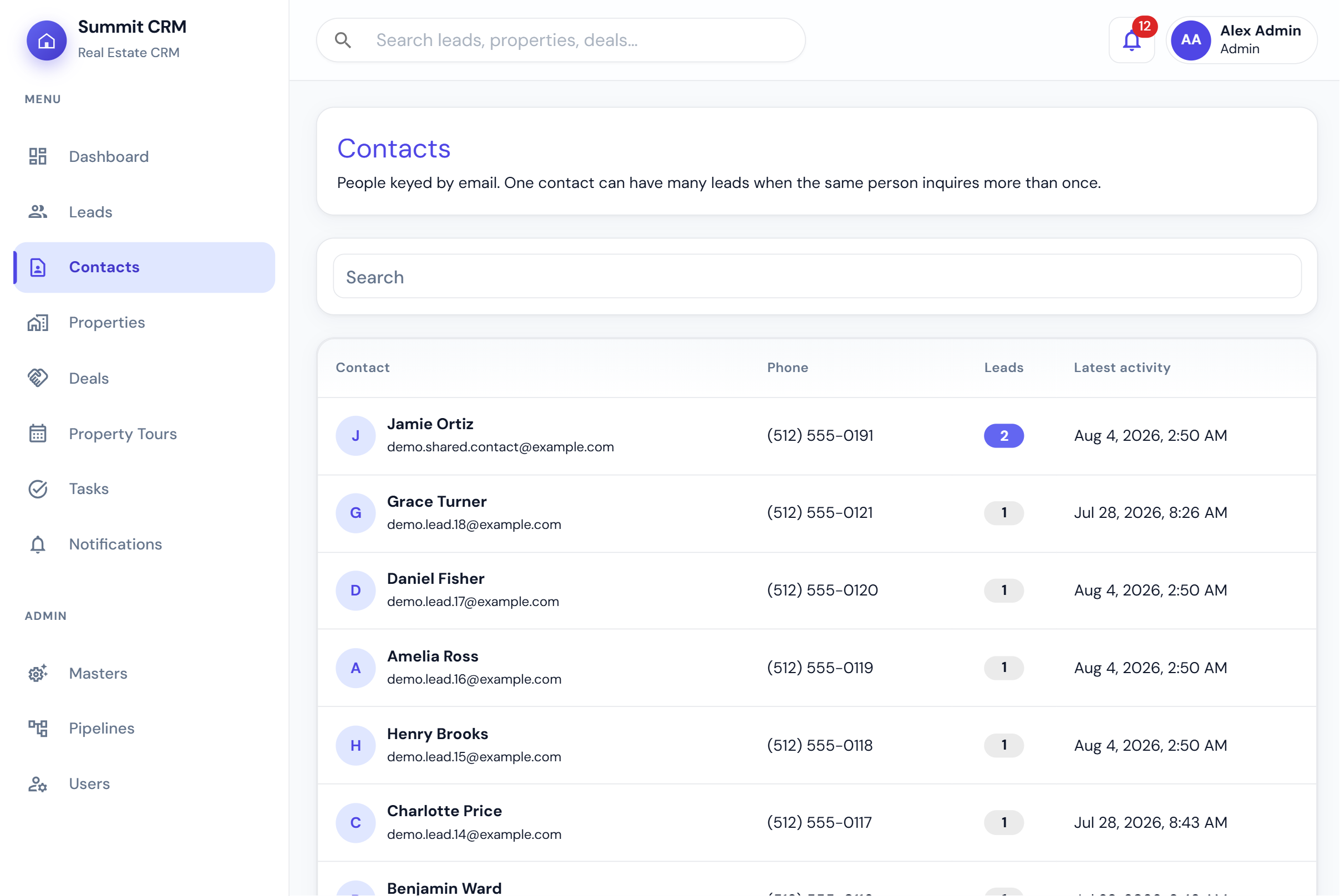
Duplicate & Incomplete Contact Data: Contact information could become inconsistent across modules, requiring a centralized contact model.
External Integration Limitations: SMTP and Cloudinary services were not always available in the development or demo environment, requiring fallback or mock behavior.
MVP Scope Control: Features such as MLS integrations, messaging, e-signatures, advanced automation, reporting, and multi-tenant architecture had to be prioritized for future phases.
A custom real estate CRM helps centralize property inquiries, structure lead workflows, improve response management, and provide better visibility across the complete buyer-to-deal journey.
Solutions
Unified Website-to-CRM Workflow: Direct connection between the public property website and CRM, allowing buyer inquiries to automatically enter the sales pipeline.
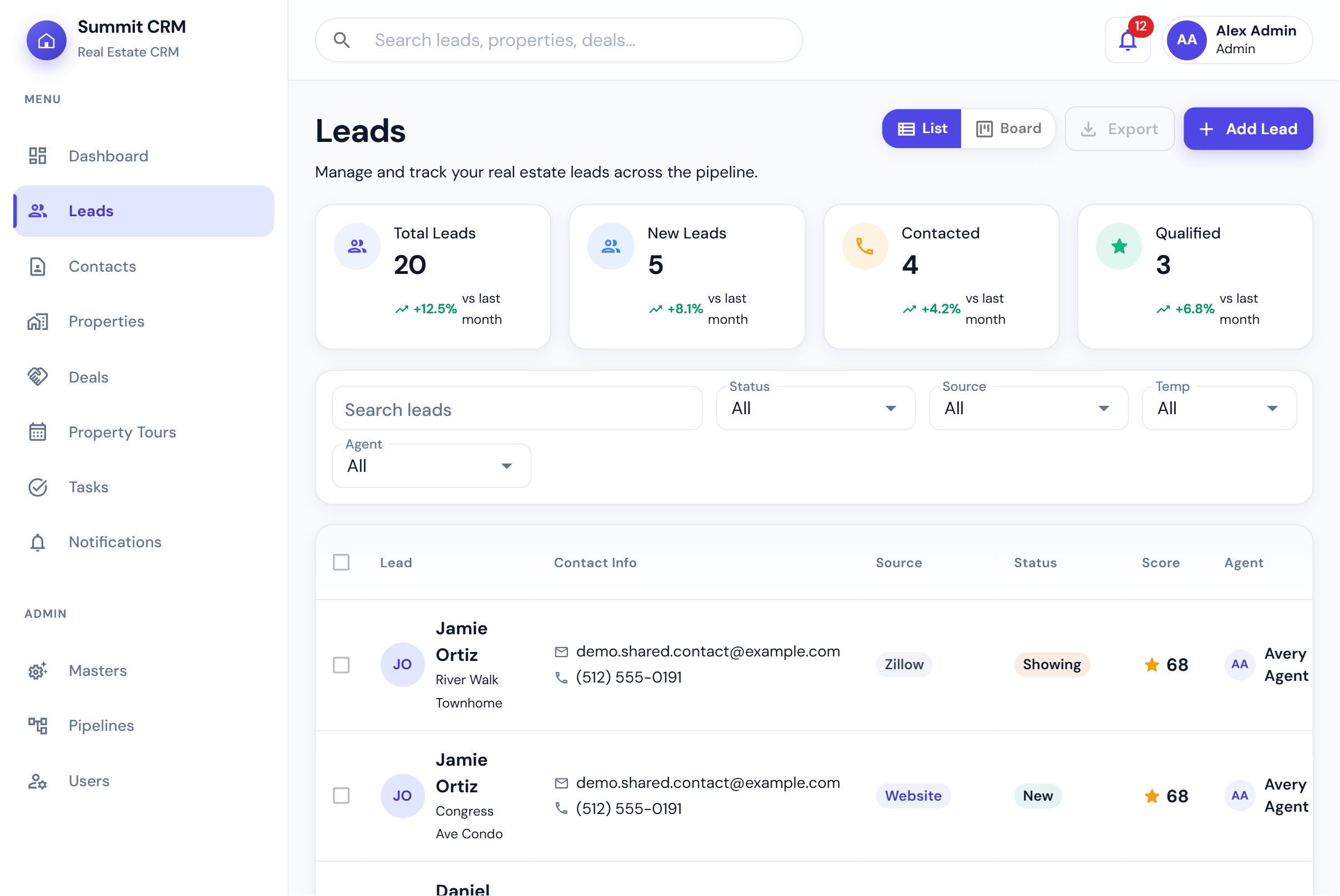
Centralized Lead & Contact Management: Manage leads, contacts, ownership, calls, notes, emails, and activity history from one workspace.
Lead Scoring & Prioritization: Categorize opportunities using lead scoring to help agents focus on higher-priority prospects.
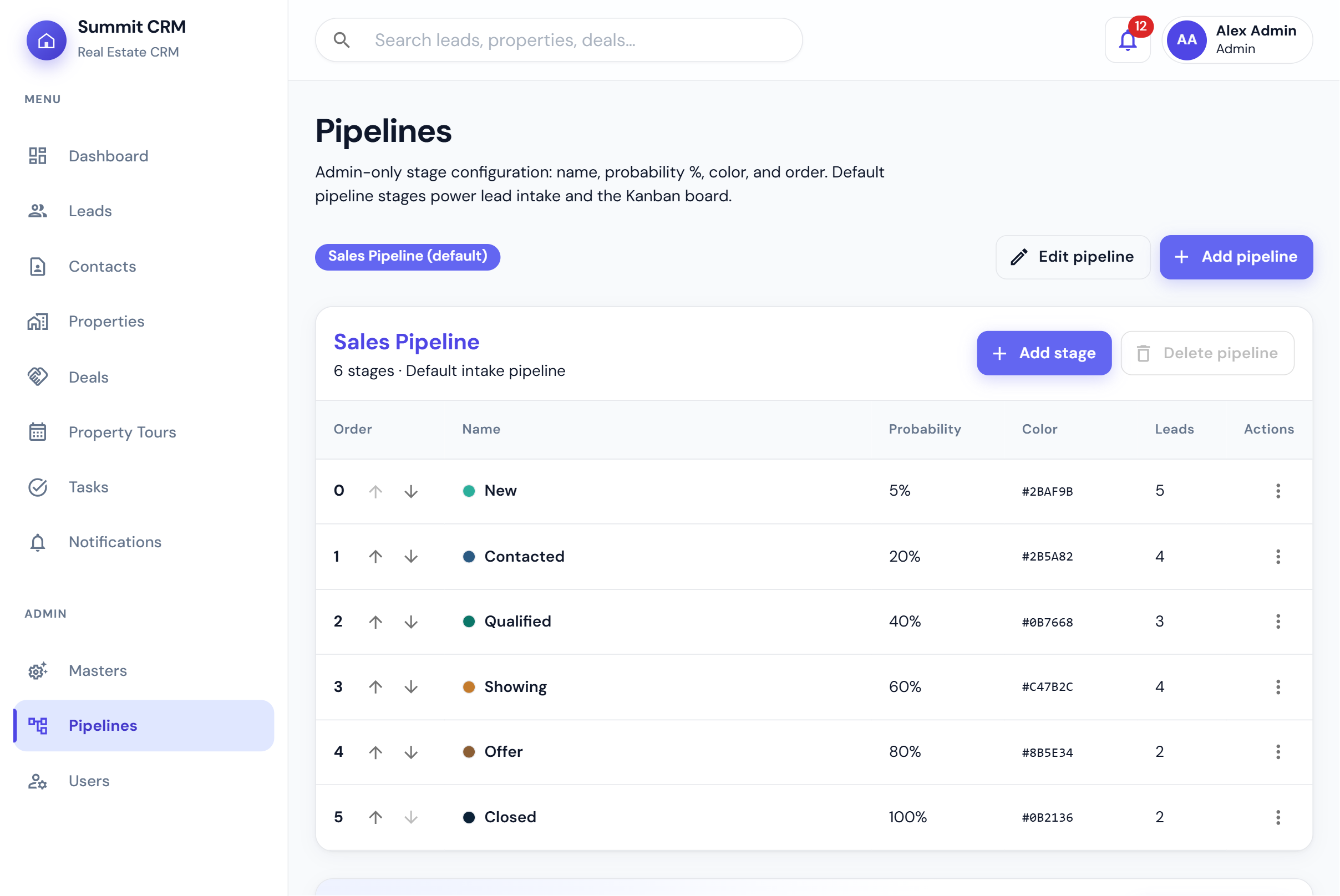
Kanban Pipeline Management: Visual drag-and-drop pipeline with configurable stages, transition validation, and automation triggers.
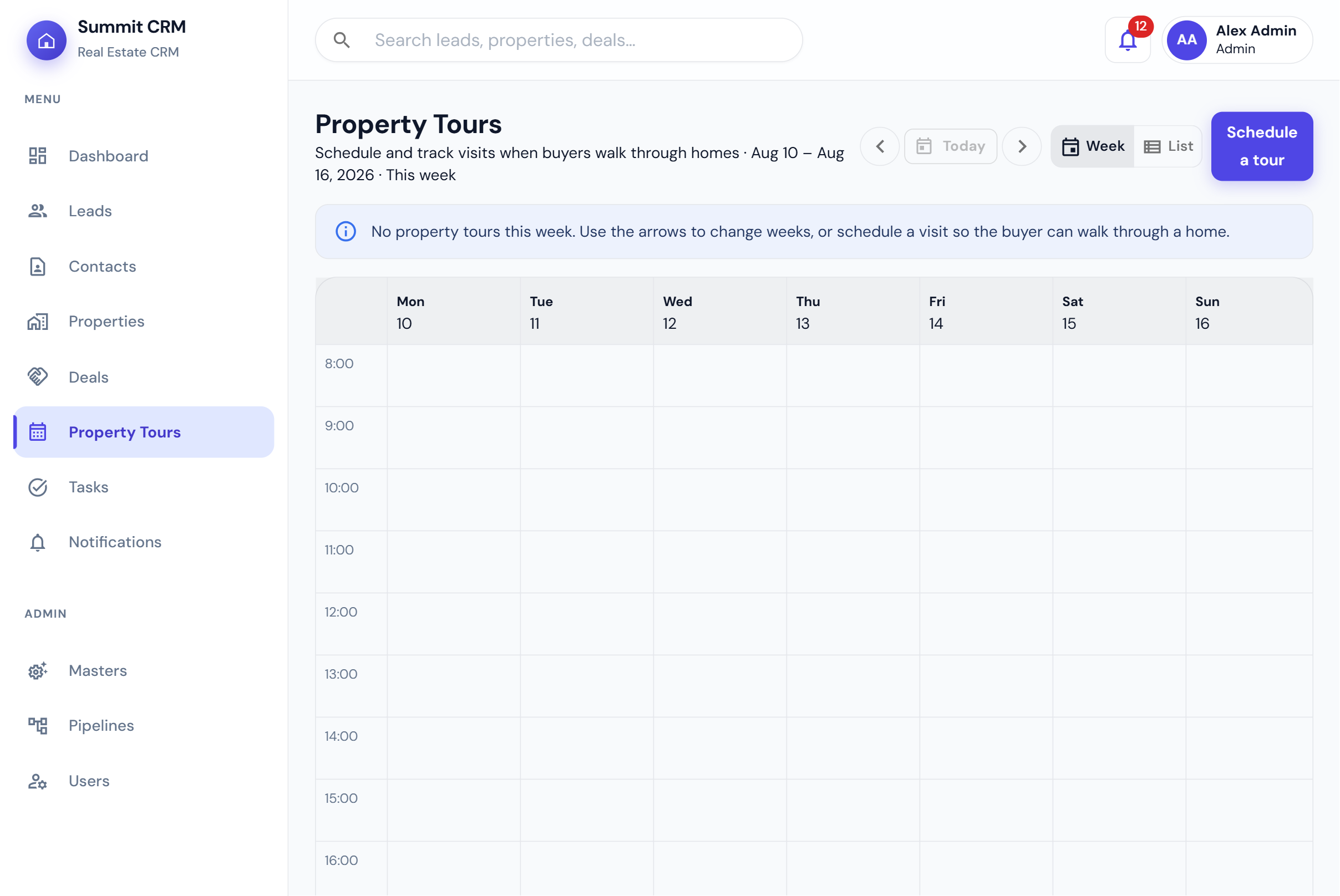
Property Tour Scheduling: Schedule property tours, track tour status, manage calendar activities, and send email confirmations.
Lead-to-Deal Conversion: Convert qualified leads into deals while retaining the complete sales history and customer context.
Deal Management: Track offer details, pricing, commissions, and closing progress within the same CRM.
Tasks & Notifications: Manage follow-up tasks, deadlines, overdue alerts, and notifications to keep sales activities on track.
Manager Dashboard & Analytics: Monitor lead conversion, pipeline value, speed-to-lead, and agent performance through focused operational dashboards.
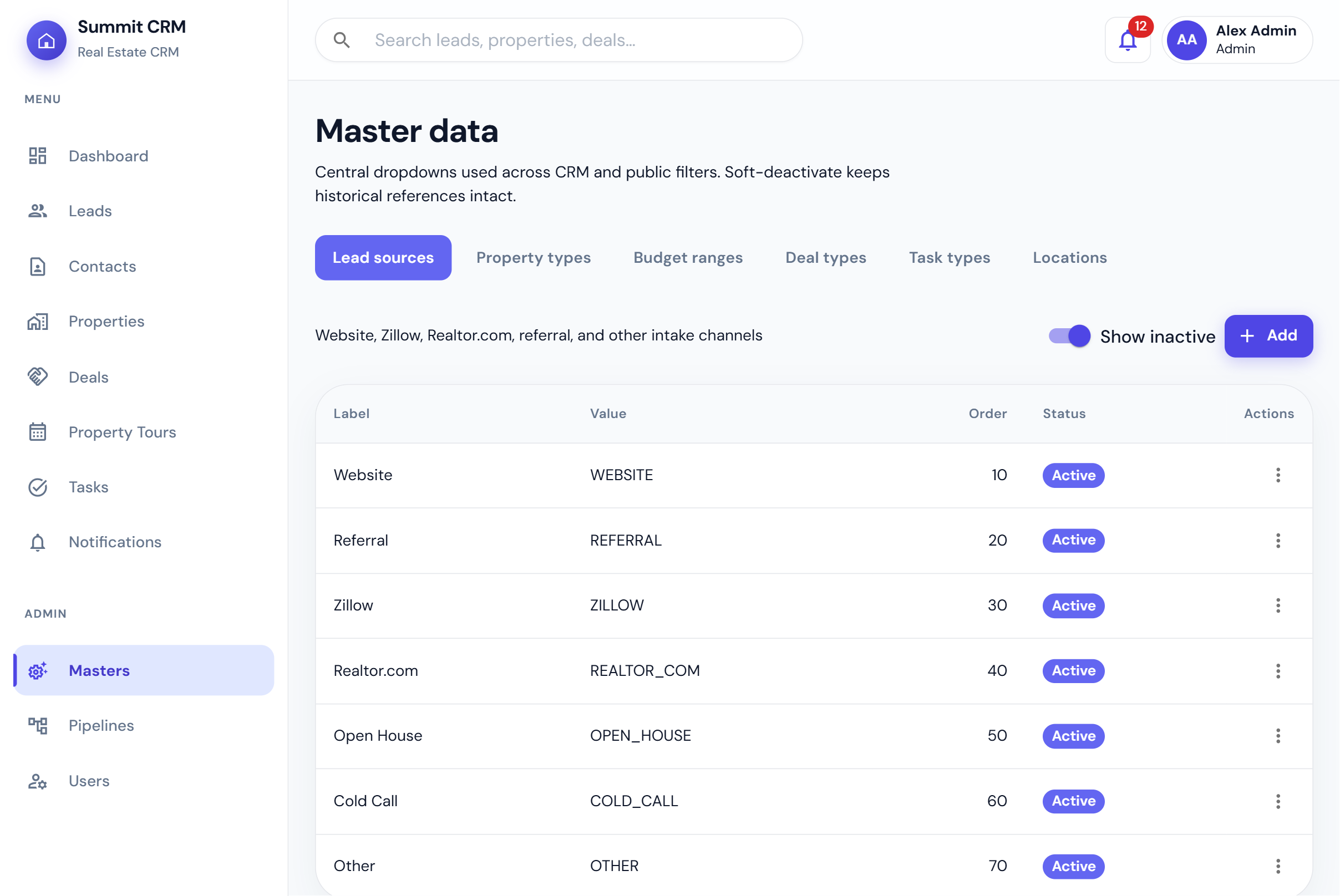
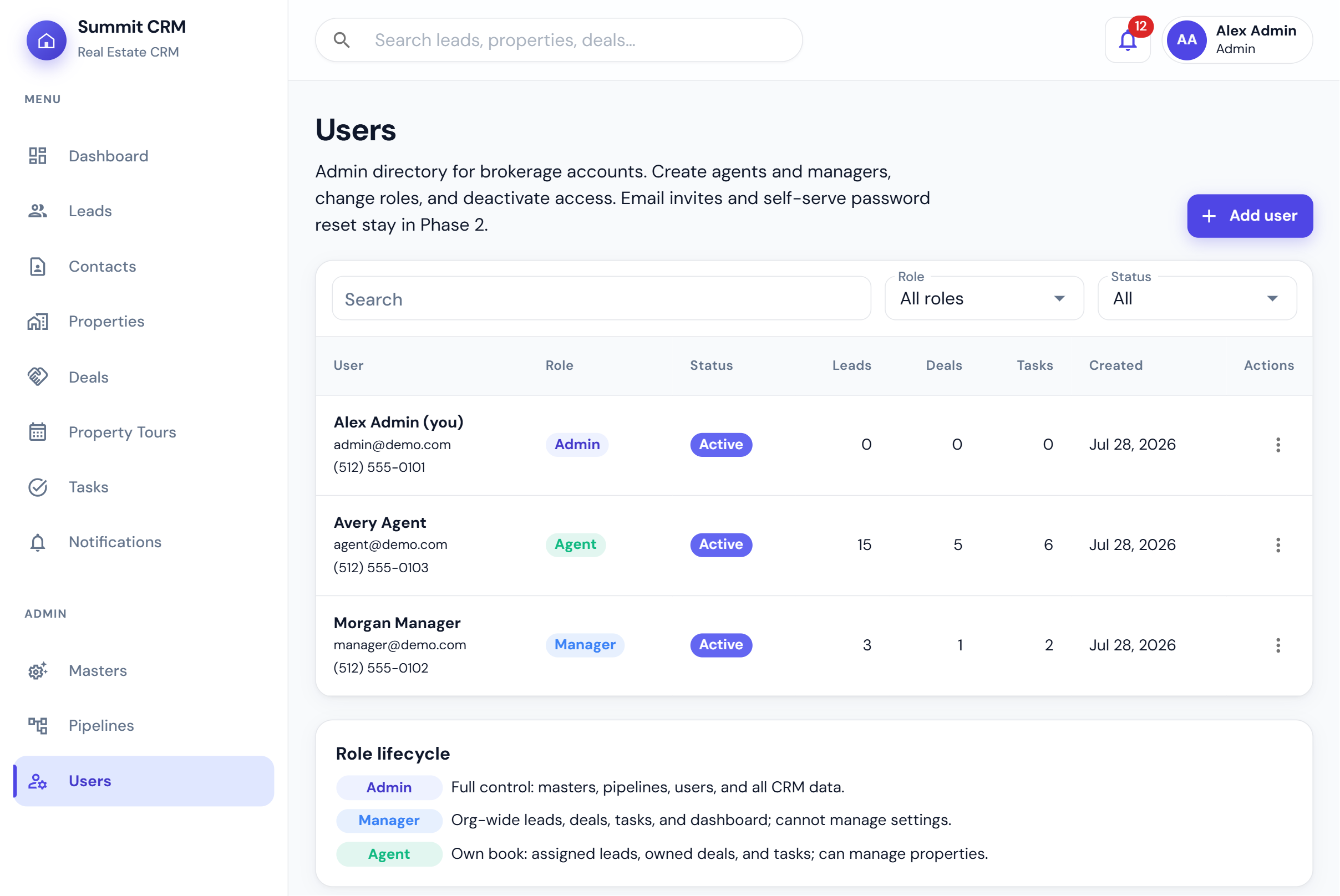
Administrative Configuration: Manage master data, pipeline settings, user roles, and permissions without requiring changes to the core application.
This solution demonstrates how custom CRM development can connect property discovery, lead management, agent activities, and deal tracking within one structured real estate sales workflow.
Key Features
Public property listing website
Search and filtering by location, budget, and property type
Property detail pages
Website inquiry forms
Website inquiry-to-CRM lead creation
Lead and contact management
Centralized contact records
Calls, notes, and email activity timeline
Hot/Warm/Cold lead scoring
Lead assignment and ownership
Kanban pipeline management
Drag-and-drop pipeline stages
Configurable CRM workflows
Pipeline transition validation
Workflow automation triggers
Property tour scheduling
Tour status tracking
Email tour confirmations
Lead-to-deal conversion
Offer and pricing tracking
Commission tracking
Closing-process management
Task management
Task deadlines
Notification center
Overdue alerts
Lead conversion analytics
Pipeline value reporting
Speed-to-lead visibility
Agent performance insights
Master data management
Pipeline configuration
Role-based user permissions
Separate public website and CRM experiences
Architecture & Scalability
The MVP uses a single Next.js application to handle both frontend and backend requirements.
Prisma ORM provides the application’s data-access layer, while SQLite supports the initial database requirements. Authentication is managed using Auth.js, and Next.js Server Actions handle application logic.
This architecture was chosen for practical MVP reasons:
- Fast development
- Limited infrastructure requirements
- Straightforward deployment and setup
- Easy demonstration of the complete workflow
The architecture should therefore be understood in the context of the MVP rather than presented as the final architecture for every future scale requirement.
The project roadmap already identifies multi-tenant architecture as a future enhancement. This provides a natural path if the solution later needs to support multiple independent real estate businesses, teams, or organizations within the same platform.
Results & Business Impact
The completed MVP established a connected real estate sales workflow with several key operational improvements:
- Direct website-to-CRM lead flow for property inquiries
- Faster lead handling through assignment, notifications, tasks, and activity tracking
- Better visibility into opportunities across pipeline stages
- Improved management oversight of lead conversion, pipeline value, speed-to-lead, and agent performance
- Centralized management of contacts, leads, interactions, property tours, tasks, and deals
- Reduced dependency on disconnected spreadsheets and individual updates
- Configurable pipeline stages, master data, user roles, and workflow controls
- A flexible CRM foundation that can support future enhancements beyond the MVP stage
Use Cases
The solution approach is particularly relevant for:
- Residential real estate agencies
- Small and mid-sized real estate teams
- Property brokers managing inbound website leads
- Real estate businesses replacing spreadsheet-based lead tracking
- Property businesses requiring website-to-CRM integration
- Teams needing structured property-tour management
- Agencies requiring agent-level pipeline visibility
- Businesses planning a custom real estate CRM MVP
Frequently Asked Questions
Talk To Us
About Your Project