
Artificial Intelligence (AI) isn’t just a buzzy concept anymore it’s part of the infrastructure of modern business. Indeed, from automated customer support and autonomous systems to predictive analytics and deep learning platforms, AI is now woven into how companies operate often without customers even noticing. Conversely, many technologies that were niche five years ago are now mainstream.
At KanhaSoft, we watch these shifts not merely as spectators, but as participants. Over the years, we’ve seen companies transform from tentative adopters to AI‑driven innovators and in that journey we’ve learned a few things about what works, who delivers, and why strategy matters as much as code. Therefore, we crafted this guide to help you cut through the noise.
In this comprehensive 2026 overview, we spotlight the Top Artificial Intelligence (AI) Companies in India those standing out not just in India, but globally with footprints and clients in the USA, UK, UAE, Israel, Switzerland, and beyond. Consequently, you’ll find firms that deliver real results not just slide decks.
As we often say (and you’ll see throughout this piece): Build ahead, don’t fall behind.
How We Evaluated These Companies
To make this list meaningful, we used criteria that matter in real‑world AI impact:
-
Innovation Output: Proven research, products, or algorithm deployments
-
Business Impact: Quantifiable outcomes for clients
-
Global Reach: Effective delivery across major markets, including USA, UK, UAE, Israel, and Switzerland
-
Scalability & Integration: Ability to work with complex enterprise systems
-
Sustainable Execution: Strong project delivery, compliance, security, and governance
In addition, we ensured the list covered a range of company types, from full‑service AI developers to data science specialists and enterprise partners. Notably, we avoided purely hype‑driven names and focused on real delivery capability.
1. KanhaSoft — AI That Works (Not Just Wows)
Let’s begin with ourselves — because we do have skin in this game (and because we’ve earned it through consistent delivery, not vanity). At KanhaSoft, we build AI solutions that solve real problems across sectors like logistics, healthcare, real estate tech, and enterprise automation. Moreover, we do so for businesses with complex requirements and global reach.
Unlike teams that develop models in isolation, we embed AI into business workflows with dashboards, feedback loops, and continuous learning mechanisms so your AI evolves with your data. For instance, one of our clients in the logistics space (operating in the UAE and Switzerland) saw forecasting errors fall by 37 % within weeks — and that wasn’t luck. Rather, it was a tailored ensemble of time‑series models, anomaly detection frameworks, and stakeholder‑driven dashboards.
In addition to predictive insights, we specialize in:
-
AI‑driven automation platforms
-
Natural Language Processing (NLP) for multi‑language bots
-
Computer Vision solutions for domain‑specific use cases
-
Advanced analytics and recommendation engines
Because we develop AI systems that integrate with real business data and regulatory requirements (think GDPR and data‑residency needs in Switzerland and UAE), we see real engagement and adoption — not abandoned prototypes.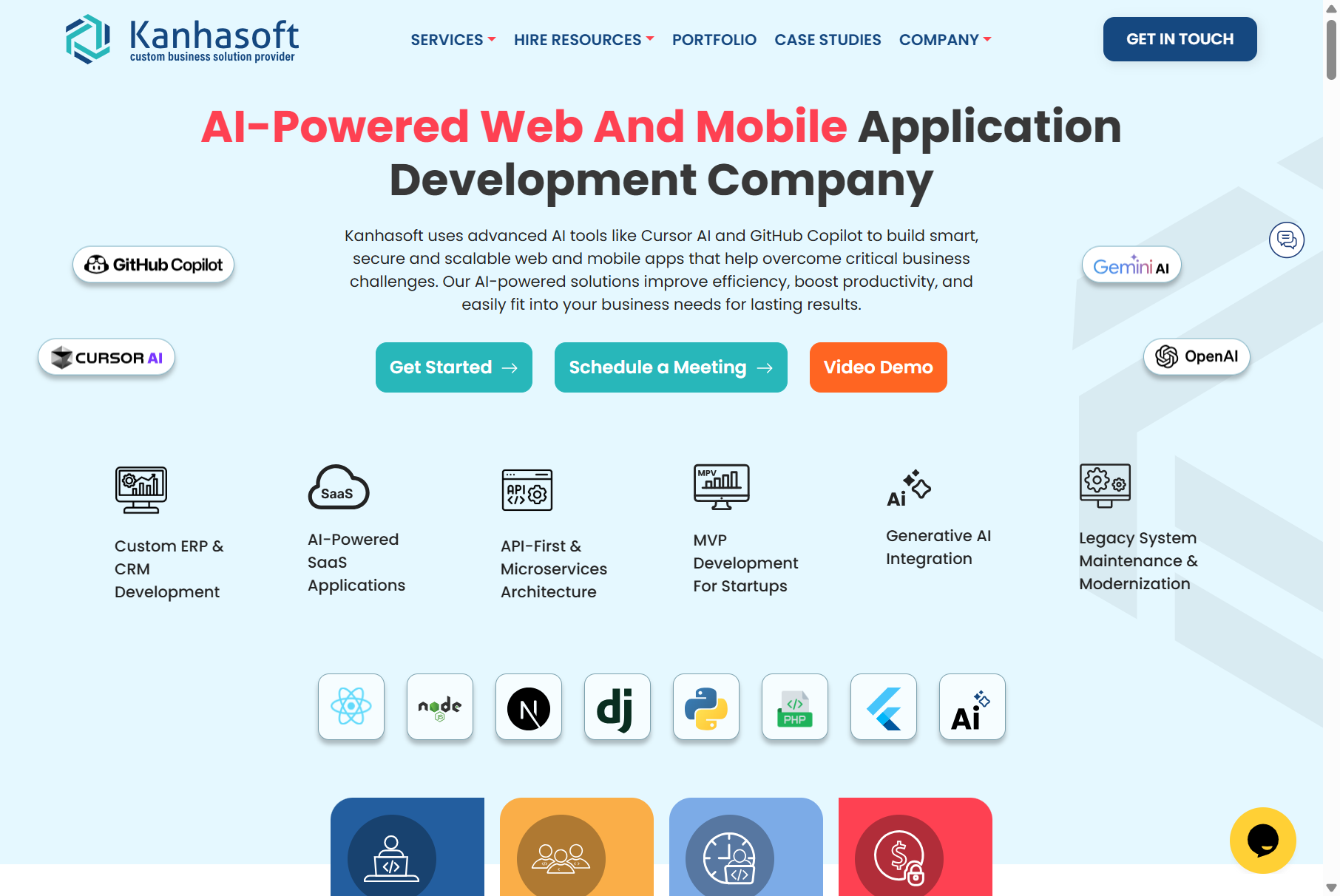
2. Tata Consultancy Services (TCS) — Enterprise‑Grade AI at Scale
When your AI project needs to move from pilot to platform, TCS is often in the conversation. In fact, many large financial institutions, telecoms, and healthcare systems lean on TCS’s AI and analytics frameworks to digitize processes at scale. With a decade of AI evolution behind them, they combine deep domain knowledge with strong delivery discipline.
In particular, TCS brings:
-
AI for enterprise process automation
-
Predictive risk and compliance systems
-
Cognitive computing frameworks
Furthermore, TCS’s experience in global deployments means they understand regional nuances — whether it’s customer engagement in the UK, operational compliance in the EU, or data governance in the USA.
3. Infosys — From Data to Decision Intelligence
Infosys has matured its AI offerings to focus on intelligent automation and decision optimization. Unlike companies that just build models, Infosys partners with global enterprises to create platforms that continuously learn from data and improve over time.
Their solutions include:
-
AI‑augmented business process intelligence (BPI)
-
Conversational AI (bots + voice‑enabled systems)
-
Deep learning for complex pattern recognition
Importantly, Infosys often pairs AI with broader digital transformation roadmaps, ensuring that insights generated by AI lead to meaningful business actions.
4. HCL Technologies — Engineering + AI for Systems Intelligence
Where engineering complexity meets AI innovation, HCL Technologies shines. This company brings strong capabilities in combining AI with IoT, robotics, and edge computing — which is especially useful for industrial automation, manufacturing analytics, and smart infrastructure projects.
Moreover, HCL’s AI frameworks often incorporate:
-
Computer Vision for quality inspection
-
Predictive maintenance systems
-
AI orchestration layers for hybrid cloud environments
They are a go‑to choice for businesses that need large‑scale engineering rigor alongside AI sophistication.
5. Wipro — Cognitive Intelligence Meets Automation
Wipro combines cognitive AI (understanding, reasoning, learning) with automation (doing). As a result, their solutions often reduce human workload on repetitive tasks while surfacing insights that help teams act faster.
Key areas of focus include:
-
AI + RPA (robotic process automation)
-
Contextual chatbots and NLP systems
-
Data‑centric decision platforms
Furthermore, Wipro’s strong consulting arm ensures that AI initiatives align with enterprise strategy from the outset — rather than being treated as isolated “tech experiments.”
6. Accenture India — Global Strategy Backed by Local Delivery
Although Accenture is global, its Indian arm plays a major role in delivering enterprise AI solutions worldwide. As a result, Accenture often bridges the gap between boardroom AI strategy and production software execution. Their strength lies in:
-
Enterprise AI governance frameworks
-
Industry‑specific AI accelerators
-
Cross‑channel implementation at global scale
Interestingly, Accenture’s work frequently spans continents — from compliance engines in the UK to predictive service platforms in the USA, and AI‑enabled customer experience platforms in the UAE.
7. Fractal Analytics — Turning Data Into Competitive Edge
If data is the foundation of AI, then Fractal Analytics is one of the companies that specializes in leveraging that foundation for strategic advantage. By combining advanced analytics with machine learning, they help enterprise clients make smarter decisions — not just generate reports.
Their offerings include:
-
Decision intelligence platforms
-
Next‑best‑action systems for customer engagement
-
Deep learning solutions for image, text, and behavioral data
Moreover, Fractal is known for helping businesses move past dashboards and into systems that proactively suggest actions, which is the real promise of AI.
8. LatentView Analytics — AI Meets Analytical Precision
Similar to Fractal but with a distinctive appeal, LatentView Analytics focuses on blending analytical intelligence with machine learning. Consequently, they help companies extract meaningful signals from complex datasets — which is essential when you’re dealing with high‑volume user behavior or intricate pricing models.
Their specialties include:
-
Predictive analytics
-
Customer segmentation and lifetime value modeling
-
ML‑driven performance insights
Notably, their consultative model helps companies embed AI into core operational workflows — instead of leaving it on the periphery.
9. GAVS Technologies — AI for Operations and Resilience
As enterprises grow, operational complexity grows faster. GAVS Technologies tackles this head‑on with AI frameworks that help IT and business operations predict issues, automate responses, and ensure uptime. This makes them particularly relevant to:
-
Healthcare IT systems
-
AI‑enhanced observability platforms
-
Automated remediation engines
Additionally, GAVS often combines traditional AI with observability data to create systems that are self‑aware and responsive, which is a major leap toward autonomous operations.
10. CRMIT Solutions — AI for CRM, CX, and Engagement Optimization
Finally, CRMIT Solutions blends customer relationship expertise with AI — especially for sales, support, and engagement functions. AI in CRM contexts can do things like:
-
Lead scoring automation
-
Sentiment‑aware engagement triggers
-
AI‑assisted recommendation engines
This focus is particularly helpful for businesses where customer experience directly influences revenue — such as retail, real estate, and financial services.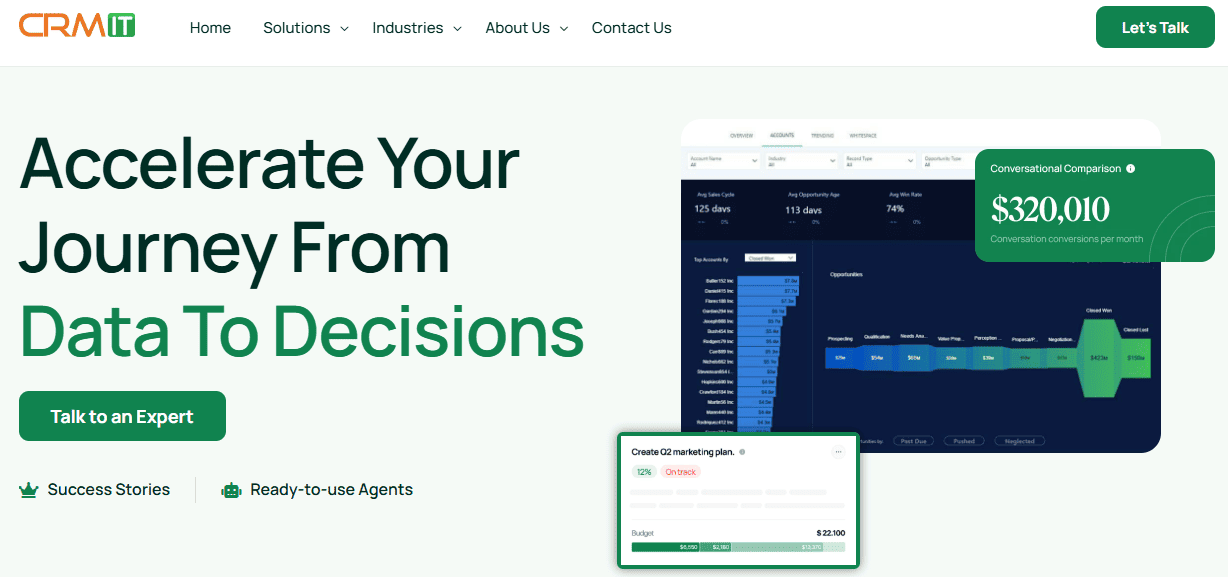
Emerging and Honorable Mentions
While the list above highlights companies with broad portfolios and global presence, several other emerging names deserve a shout‑out due to their niche strength or innovation edge:
-
InData Labs — Deep data science + AI for domain‑specific problems
-
Manthan — Analytics + AI platforms focused on consumer insights
-
Qure.ai — Healthcare and medical imaging AI
-
Cognizant AI Labs (India) — Enterprise research and implementation
-
Persistent Systems — Cloud‑native AI solutions with strong engineering focus
These firms may not fit a strict “top 10” by size, but they punch above weight in specific impact areas — and in an AI landscape that rewards specialization, that matters.
as retail, real estate, and financial services.
Trends Shaping AI in India and Globally (2026)
Before we wrap up, let’s zoom out for context. Looking at these companies collectively reveals a few undeniable trends:
AI Goes Beyond Models — It’s Now a Platform Component
In other words, businesses no longer ask “Can we build an AI model?” Instead they ask “How do we deploy it, govern it, and scale it?”
MLOps and Governance Are Now Must‑Haves
AI projects today must incorporate model monitoring, performance tracking, versioning, bias detection, and compliance — not just accuracy curves.
Explainable AI (XAI) Is No Longer Optional
Especially in regulated sectors (healthcare, finance, telecom), customers and regulators alike demand explanable decisions — making XAI critical.
Global and Multi‑Language Design Matters
Companies hoping to operate across the USA, UK, UAE, Israel, Switzerland — and beyond — are building AI that understands context, culture, and language at scale.
AI That Collaborates With People — Not Replaces Them
Modern systems emphasize decision support, human‑in‑the‑loop workflows, and augmentation — because in real businesses, responsibility matters.
Anecdote — When AI Made the Difference (and Got Us Coffee)
We remember a project (you know — the kind that starts on a sunny Monday and very quickly moves to “let’s just get this done by Wednesday”). A mid‑sized logistics company operating across the UAE and Switzerland had forecasting chaos: spreadsheets, guesswork, and weekly fights over inventory projections. There was one memorable afternoon when the COO said, “If this AI thing works, I’ll buy the team dinner.”
We built a forecasting model with time‑series, trend decomposition, and anomaly detectors tied to a dashboard. Within eight weeks, stockouts dropped sharply and pipeline visibility improved. And yes — dinner happened (with extra dessert for the person who said “See? AI can actually predict things!”). That’s the kind of real‑world value that makes AI business‑ready — not just shiny.
Conclusion — AI Isn’t Hype Anymore — It’s the Baseline
As we look at the AI landscape in India for 2026, a clear picture emerges: AI is no longer the future — it’s the baseline for competitive business. Whether you’re in logistics, healthcare, retail, finance, or customer engagement, the companies above are shaping how AI is realized in practical, scalable, and impactful ways.
From KanhaSoft’s bespoke AI solutions to the enterprise engines powering global transformations, the theme is consistent: AI succeeds when it aligns with business strategy, integrates with real data, and supports decision‑making, not just automation.
In closing (with our trademark flourish), remember this: Build ahead, don’t fall behind. AI isn’t a luxury — it’s the engine that differentiates businesses that grow from those that get left wondering “Why didn’t we start sooner?”
Here’s to AI that works, insights that matter, and partnerships that deliver.